Casting In Nepal: How International Productions Find The Right People
Casting in Nepal can mean finding a trained actor, a model, a child, a family, a dancer, an athlete, a mountain guide, a community, a specialist or simply a person who looks and feels right for the camera. For international productions, good casting begins with understanding the brief, the place, the people and the realities of getting the right person onto set.
Casting Starts With The Brief
A good casting process usually begins long before anybody walks into an audition room. We first need to understand what the production is actually looking for, where the filming will take place, how the person will be used, what they need to say or do, what languages are involved, how much time is available and what kind of person the director has in mind.
Sometimes the brief is highly specific. Sometimes it is surprisingly open. A production may be looking for a twenty something actor who can perform in English, a family from a particular community, a professional dancer, a mountain guide, a group of schoolchildren, a fashion model, a businessman who has never acted before, or simply someone whose face feels right when they appear on camera.
That distinction matters because casting in Nepal is not one database of actors. It is a much wider search through people, professions, communities, regions and networks.
Nepal Does Not Have One Casting Pool
Kathmandu has a concentration of actors, models, dancers, musicians, presenters and other professional performers, but the right person for a production may not live in Kathmandu at all.
A documentary may need a farmer from a particular district. A commercial may need a family with a very specific appearance and age range. A feature film may require someone who genuinely knows the mountains. A fashion campaign may need models comfortable working in difficult terrain. A production set in the Terai, Mustang, Dolakha or the Everest region may be better served by looking locally rather than bringing everyone from Kathmandu.
This is where casting and location knowledge begin to overlap. The people we find often have a relationship with the place in which the production wants to work.
Actors And Professional Talent
Nepal has a growing pool of trained actors and performers working across cinema, television, theatre, advertising, music videos and digital production. For international productions, the challenge is often less about finding an actor and more about finding the particular actor who fits the role, the language, the physicality and the production environment.
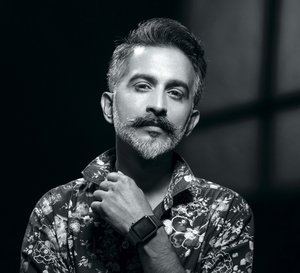
Gautam Dhimal's casting work has included international television and film productions as well as advertising campaigns. His film portfolio includes Our Girl, where he worked as Nepal Producer and Casting Director for BBC One, and Gap Year for Channel 4, alongside casting responsibilities on international commercial productions for brands and production companies from Europe, Asia, Australia and New Zealand.
You can explore the wider body of work through Gautam Dhimal's Films portfolio, where the individual productions and Gautam's roles are documented.
Real People Can Be The Right Cast
Some of the most convincing people on camera have never considered themselves actors.
International productions frequently need real people because the story calls for authenticity that cannot be manufactured in an audition room. A documentary may need someone with a particular lived experience. A commercial may need a family that genuinely behaves like a family. A tourism film may need a guide, farmer, craftsman, athlete or local resident who understands the environment naturally.
Finding these people requires a different kind of search. It means talking to people, understanding communities and knowing where to look.
This is one reason our casting network extends beyond conventional actors and models. Location Nepal's casting service covers real people, families, children, background artists, performers and highly specific local characters as well as professional talent. Casting Services in Nepal is designed around that wider understanding of casting.
Casting Children Requires More Care
Children can be exactly what a production needs, particularly for family stories, advertising, documentaries and television. But child casting needs more preparation than simply finding a child who looks right for the role.
Availability, parental consent, working conditions, schedules, supervision and the practical requirements of the production all have to be considered. The child's comfort and welfare have to remain part of the production planning from the beginning.
For international productions, this is another reason to work through an experienced local casting and production structure rather than treating casting as an isolated search for faces.
Models Are Not Always Actors
The reverse is also true.
A model who photographs beautifully may not necessarily be comfortable delivering dialogue. An experienced actor may be excellent in a dramatic scene but not necessarily fit the visual language of a fashion campaign. A dancer may have precisely the physical confidence required for a commercial even without traditional acting experience.
Gautam's work sits across these different worlds because his own career has moved between film production, photography, fashion, advertising and commercial production. His fashion and commercial casting work includes professional models, performers, dancers, athletes, influencers and real people for advertising, fashion campaigns, editorials, music videos and branded content.
That broader visual understanding is useful when the casting brief comes from a photographer, fashion editor, art director or advertising agency rather than a film director.
Sometimes The Brief Is About A Skill
There are productions where the most important part of the casting brief is not appearance.
The person may need to ride a horse, climb, ski, dance, play an instrument, work with animals, speak a particular language, operate machinery, perform a traditional skill or simply be completely comfortable in an environment where an ordinary actor would look out of place.
Nepal's geography creates many of these requirements. Mountain productions may need guides and climbers. Rural productions may need farmers or craftspeople. Cultural stories may require traditional performers. Commercials may need athletes, dancers or specialists.
In those cases, casting becomes research.
Regional Casting Can Save A Production
If a production is shooting in Pokhara, Mustang, Chitwan, Dolakha, the Terai or the Everest region, it is worth asking whether the right people already live there.
Regional casting can reduce travel, accommodation and transport requirements while also producing a more convincing connection between the person and the location. It can also open possibilities that a Kathmandu based search would never find.
Our work as a production company means we can combine casting with location scouting across Nepal, which is particularly useful when the production needs both a place and the people who belong to it.
Extras Are A Production Problem As Much As A Casting Problem
Finding ten background artists is one thing. Finding several hundred people who need to arrive at the right place, at the right time, dressed appropriately, briefed properly and ready to work is a production operation.
We have dealt with casting at considerably larger scales. The Nippon Paint Holi commercial, for example, involved roughly 400 extras and more than 200 crew members across Bhaktapur and Patan, alongside substantial lighting, grip, vehicles, generators and even two elephants.
At that scale, casting cannot be separated from transport, scheduling, wardrobe, holding areas, crowd management and communication. The people are part of the production infrastructure.
International Productions Often Need Local Cultural Understanding
A casting brief can look perfectly clear on paper and still be difficult to interpret locally.
A director may use a reference from another country. A brand may ask for a particular cultural appearance without knowing how that translates in Nepal. A production may need a traditional performer but not know which community, region or terminology to begin with.
A local casting director needs to understand what the international team is trying to achieve while also knowing what is realistic and respectful locally.
That translation between the creative brief and the real people available in Nepal is one of the most important parts of the job.
Language Can Change The Entire Casting Search
Nepal is linguistically diverse, and language can be a central part of casting.
A role may require Nepali, English, Hindi or another regional language. Sometimes the requirement is fluency. Sometimes it is simply the ability to deliver a line naturally without sounding as though it has been memorised.
For international productions, bilingual and multilingual talent can be particularly valuable because they can work between the local production environment and the international creative team.
Self Tapes Are Useful, But They Are Not Everything
Video auditions have made international casting considerably easier. A production based in London, Los Angeles, Mumbai or Sydney can review auditions from Nepal without bringing everyone into a room.
We regularly work with audition material, shortlists and remote casting requirements. But a self tape does not always tell the entire story.
How somebody behaves when the camera is actually operating can be very different from a rehearsed phone recording. Chemistry between two people cannot always be understood individually. Some real people are extraordinary on location but terrible at formal auditions. Some trained actors become much stronger once they understand the scene.
The audition is therefore one stage in the process, not necessarily the whole process.
The Camera Does Not Always Want The Most Polished Person
There is a useful lesson in casting that becomes obvious after enough years around cameras.
The most polished person is not always the most interesting person to photograph or film.
Sometimes the right face has an unusual quality. Sometimes it is the way somebody moves. Sometimes it is their voice, their hands, their confidence, their hesitation or the way they respond to another person.
This is particularly important in photography and fashion, where the casting decision can influence the entire visual character of a campaign.
Gautam's own photographic work, including Himalayan Fashion Adventure, grew out of this understanding of people, place, styling and camera. The project brought together models, designers, stylists, production crew and extreme Himalayan locations, and received third prize in the professional Advertising/Fashion category of the 2022 International Photography Awards.
Casting And Location Can Be Connected
A person can look completely different depending on where you put them.
The same model who works beautifully in a studio may not be the right choice for a high altitude campaign. Someone who looks ordinary against a city background may become exactly right when placed in a Himalayan village. A documentary subject may need to be found because of their relationship to a place rather than because they fit a conventional casting description.
This is one of the advantages of having casting and production under the same roof. Location, light, movement, clothing, transport and people can be considered together instead of as separate departments.
Our Girl And The Reality Of International Casting
One of Gautam's most useful casting experiences came through Our Girl, the BBC One television series filmed partly in Nepal.
For the Nepal production, Gautam worked as Nepal Producer and Casting Director, with casting taking place alongside the practical requirements of a major international television production. The job was not simply to find faces. It involved understanding the script, identifying appropriate people, coordinating the local casting process and making sure the selected talent could work within the realities of the production.
The experience is representative of the way Gautam's casting work has developed over more than two decades. Casting is connected to production because the person eventually has to arrive on location, understand the direction and perform within the actual conditions of the shoot.
Explore the Our Girl production.
Casting Experience Across Commercials And Global Brands
Gautam's casting work extends well beyond television and film.
His documented film and commercial credits include casting work for Nippon Paint, Powerade, Doosan, China Postal Express, Nestea, Panasonic, Vicks, Sazka Sportka and other international productions. His role has varied between Casting Director, Casting Manager, Production Manager, Line Producer and Nepal Producer depending on the project.
That distinction is useful because commercial casting often works differently from narrative film casting. A brand may be looking for a model rather than an actor, a particular family rather than professional performers, or a combination of people who can carry a visual campaign without traditional dialogue.
Gautam's film and television casting services and fashion, commercial and music video casting reflect that wider range.
Casting For Photography Is A Different Conversation
Photography casting is often overlooked because there is no dialogue and sometimes no conventional acting role. But the person in front of the camera still has to carry the image.
Fashion editorials, advertising photography, magazine covers, tourism campaigns, beauty campaigns, lifestyle photography and commercial shoots all require different kinds of people.
Gautam's background as a photographer becomes particularly relevant here. He understands what happens when a model actually stands in front of the camera, how light interacts with a face, how clothing moves, how a person occupies a frame and how much direction somebody needs.
That experience has made casting part of his wider photographic and production practice rather than a separate service added after the creative concept has already been decided.
Casting For Fashion And Commercial Campaigns
Fashion and commercial work can require an entirely different vocabulary.
A casting may be based on height, measurements, movement, age, styling, attitude, skin tone, hair, physicality, camera confidence or the ability to work within a particular brand language. It may involve models, influencers, dancers, actors, athletes or people who have never worked professionally before.
Gautam's fashion casting network extends through his work with Himalayan Fashion Adventure, Location Nepal and Fantastic Film & Photography, with experience supporting fashion campaigns, editorials, music videos, digital campaigns and commercial productions.
For photographers, designers, agencies and brands, this means the casting conversation does not have to begin with a finished production. It can begin with a visual reference, mood board or even a rough idea.
Casting Director Experience Helps Because Casting Is Part Of Production
There is a practical advantage in having a Casting Director who has also spent years producing.
Gautam has worked as a Producer, Line Producer, Production Manager, Casting Director, Photographer, Cinematographer and Fixer. His casting work therefore sits inside a much larger understanding of how international productions operate.
He knows that a person who looks perfect on a casting sheet is not necessarily the right person if they cannot reach the location, are unavailable for the shooting dates, cannot perform the required action or do not understand the demands of an international set.
Casting decisions have consequences for the entire production.
Casting For A Mountain Production Is Different
If you are casting for a production in Kathmandu, the options can be relatively broad. Move the shoot to 4,000 metres and the conversation changes.
Altitude, weather, travel time, accommodation, physical ability and acclimatisation can all become relevant. The person may need to be comfortable walking for hours, working in cold weather or travelling by helicopter or on foot.
This is where casting becomes inseparable from production planning. The right person has to be right for the role and right for the environment.
Casting For Documentary Work Is Another World
Documentary casting often begins without a conventional casting call.
The production may be looking for people whose lives already contain the story. A scientist, farmer, monk, guide, conservationist, artist, craftsman, mountaineer or community leader may become central to a film simply because of who they are and what they know.
Finding such people requires research, local relationships and enough time to understand the story before the camera arrives.
This is one reason Gautam's wider work across documentary production, photography, conservation and long term visual projects feeds naturally into casting. People are not simply selected for appearance. Their relationship with the story matters.
A Good Casting Brief Saves Time
When an international production approaches us, the more information we have, the better the casting becomes.
We want to know the production, role or requirement, age range, gender if relevant, language, physical characteristics, special skills, location, shooting dates, number of people, usage, wardrobe requirements and whether the person needs to act, model, speak, move or simply appear naturally.
References are extremely helpful. A photograph, scene reference, mood board, previous campaign or even a rough description can give us a much clearer understanding of what the director or creative team is imagining.
The brief does not have to be perfect. It just has to give us somewhere useful to start.
Casting Is Not Just Finding The Right Face
The casting process continues after somebody has been selected.
There may be negotiations, releases, contracts, measurements, wardrobe, fittings, travel, accommodation, call times, rehearsals, on set coordination and communication with the production team.
For large productions, hundreds of people may need to be managed. For a small photography assignment, there may be only one model, but that person can still determine whether the entire shoot works.
Good casting therefore has a long tail.
The Production Makes The Final Decision
Our role is to research, scout, recommend, audition and coordinate. The final creative decision belongs to the production.
That separation is important. A casting director should understand the brief well enough to make strong recommendations without confusing their recommendation with the director's decision.
Our job is to make the international production's choice easier by giving it good people to choose from.
What We Need From An International Production
If you are an international producer, director, photographer, creative director or agency planning to work in Nepal, you do not necessarily need to have a complete casting strategy before contacting us.
Send us the brief if you have one. Send photographs or references. Tell us the dates and location. Tell us what kind of people you imagine.
If all you have is a concept, that is also enough to begin.
Through Location Nepal's casting services, we can help develop the local search, research potential talent, coordinate auditions and bring the selected people into the production process.
What About Actors, Models And Talent Looking For Work?
Casting works in both directions.
International productions need people. People in Nepal need opportunities to be seen by those productions.
That includes established actors and models, but also dancers, musicians, presenters, athletes, performers, specialists, influencers and people who may never have considered themselves professional talent.
Gautam's casting network has increasingly become a point of connection between these two sides. The casting and audition platform is intended not only for international productions looking for people, but also for actors, models and emerging talent who want to remain visible when the right brief arrives.
You do not need to be famous to be cast. You need to be right for a particular production.
If you are serious about being considered, keep your photographs current, know your measurements, maintain a short introduction, know your availability and make sure you can respond quickly when an opportunity appears.
Following Gautam's work is another simple way to stay connected with casting announcements, production news and opportunities. His Instagram, Facebook and LinkedIn are useful places to follow the wider work happening around film, photography, fashion and production.
Gautam Dhimal's Casting Work Extends Beyond Film
One of the reasons Gautam has become such a useful casting contact in Nepal is that his work does not sit inside one industry.
A film producer may need actors. An advertising agency may need a family. A fashion photographer may need three models. A magazine may need a particular face. A tourism campaign may need a mountain guide. A documentary may need a real person with a very specific story. A designer may need models for an editorial. A music producer may need dancers. A global brand may need all of them.
The same network can be useful to each of these productions, but the way each person is selected will be different.
Gautam's experience across films and international productions, film and television casting, fashion and commercial casting, photography and fashion production gives him a much wider field of view than a casting operation focused on one category alone.
For international productions coming to Nepal, that breadth is increasingly important.
Nepal Has People For More Than The Obvious Roles
The easiest casting searches are often the obvious ones.
Actor. Model. Dancer. Extra.
The more interesting searches usually come afterwards.
Who can speak the language? Who actually lives there? Who knows the mountain? Who has the right hands for the close up? Who can work with an animal? Who has the right profession? Who has never acted but looks completely natural? Who can carry a fashion image? Who can represent a particular community without pretending to be somebody they are not?
Nepal has all of these people.
The challenge is knowing where to look.
Casting Is Another Form Of Location Knowledge
After enough productions, you begin to realise that people are part of the geography of a place.
A location is not only a street, building, mountain or village. It is also the people who live there, work there, move through it and understand it.
That is why casting has become such an important part of the production work we do at Location Nepal. The same local knowledge that helps us find a road, a courtyard, a school, a mountain trail or a particular building can sometimes help us find the person who makes the scene work.
Start Before The Crew Arrives
Casting should ideally begin during pre production.
The earlier we receive the brief, the more time there is to search properly, speak to people, conduct auditions, compare options, solve availability problems and understand what the production actually needs.
Last minute casting is possible. We have done it. But it is rarely the way to find the most interesting people.
If the production is travelling to Nepal, casting should be part of the Nepal planning conversation from the beginning, alongside locations, permits, crew, transport and equipment.
Casting In Nepal Is Ultimately About Understanding The Brief
There is no universal definition of the right person.
Sometimes it is an actor with years of experience. Sometimes it is a professional model. Sometimes it is a child who has never stood in front of a camera. Sometimes it is a farmer who has never heard the word casting. Sometimes it is a dancer, athlete, musician, guide or craftsman. Sometimes it is simply somebody we happen to meet because we were looking for something else.
That is what makes casting interesting.
The job is to understand what the production is trying to say, understand the people available in Nepal and bring those two things together carefully.
For international productions looking for casting in Nepal, contact Location Nepal at info@LocationNepal.com or +977 9851069133. For creative collaborations and direct work with Gautam Dhimal, contact mail@GautamDhimal.com.
Planning Casting In Nepal
If you are preparing a film, television production, commercial, fashion campaign, editorial, photography assignment, documentary, music video or branded project in Nepal, start the casting conversation early.
Send us what you know.
We will help you work out what comes next.