ANTHROPOLOGY AND CULTURAL STUDIES
Understanding People, Culture And Society Through Experience
Every Community Has A Story To Tell.
Discover Culture Through Human Connection.
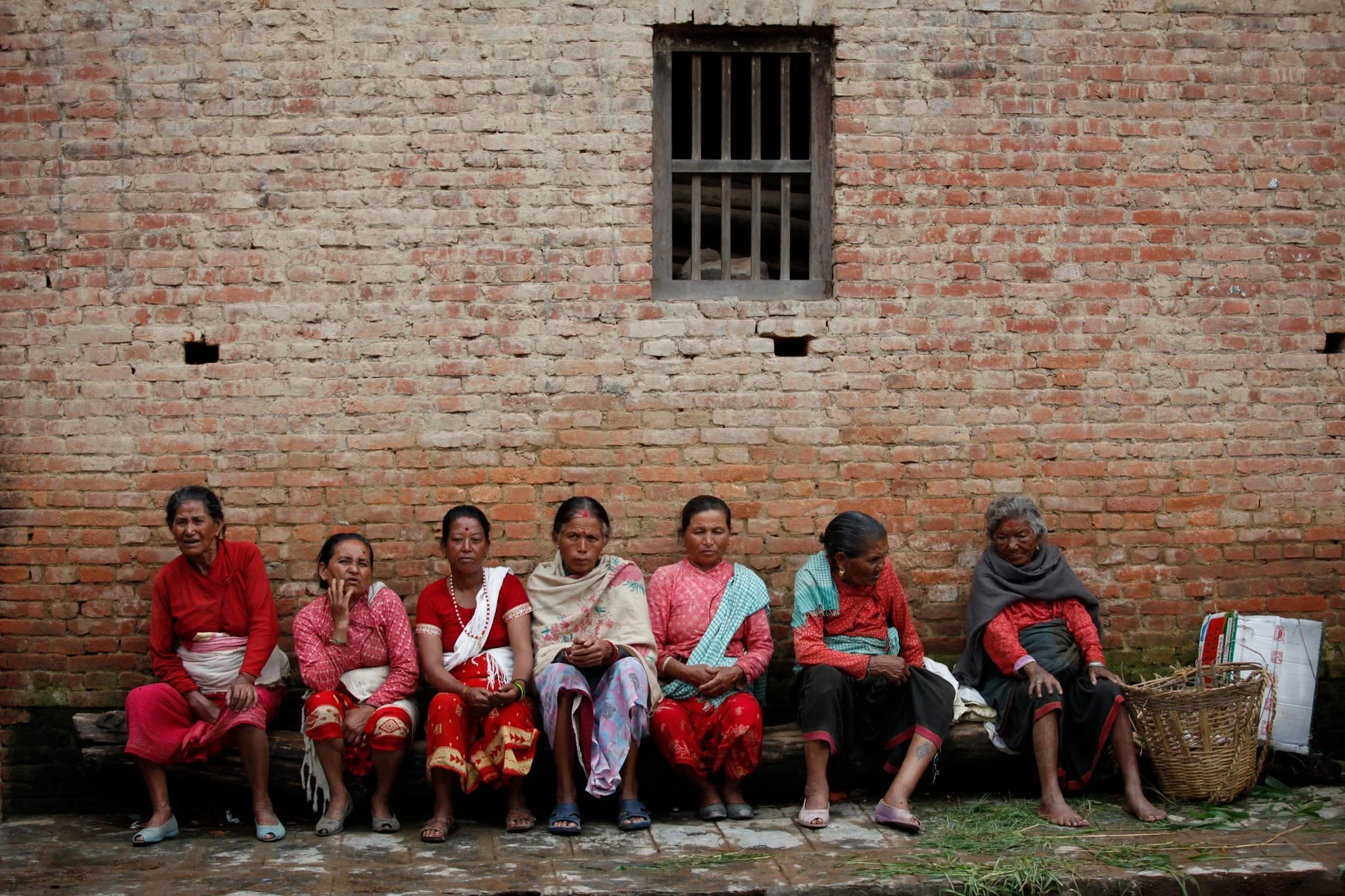
Nepal is one of the world's most culturally diverse countries.
Within a relatively small geographical area, more than one hundred ethnic communities, languages, belief systems and cultural traditions coexist across mountains, hills and plains.
Location Nepal Global Learning partners with universities to create immersive anthropology and cultural studies programs where students learn through observation, dialogue, respectful engagement and lived experience.
Students do not simply study culture.
They learn from the people who live it every day.
WHY STUDY ANTHROPOLOGY IN NEPAL
A Living Mosaic Of Cultures
Nepal offers an exceptional environment for anthropological inquiry.
Students can explore how geography, history, religion, migration, language and environment have shaped communities over centuries while continuing to influence life today.
Learning opportunities may include:
Community life.
Family structures.
Traditional livelihoods.
Festivals.
Religion.
Architecture.
Food culture.
Language.
Identity.
Migration.
Urbanisation.
Social transformation.
Rather than viewing culture as history, students experience culture as something dynamic, evolving and deeply connected to everyday life.
LEARNING THROUGH IMMERSION
Beyond Observation
The most meaningful anthropological learning happens through respectful engagement.
Programs encourage students to observe carefully, ask thoughtful questions and reflect critically on their own perspectives.
Learning activities may include:
Community visits.
Walking conversations.
Participant observation.
Cultural interpretation.
Field notes.
Reflection journals.
Group discussions.
Guest lectures.
Independent inquiry.
Collaborative learning.
Students gain a deeper understanding of both Nepal and themselves through cultural exchange.
WHAT STUDENTS CAN EXPLORE
Connecting Theory With Experience
Cultural Diversity
Explore the remarkable cultural richness that makes Nepal one of the world's most diverse societies.
Identity And Belonging
Examine how communities understand identity, tradition and belonging in a changing world.
Religion And Ritual
Understand the role of belief systems, ceremonies and spiritual practices in everyday life.
Social Change
Explore how communities adapt to urbanisation, migration, education and economic development.
Indigenous Knowledge
Learn how traditional knowledge continues to shape relationships with land, environment and community.
Language And Communication
Discover how language reflects culture, identity and social relationships.
Everyday Life
Observe how ordinary routines reveal extraordinary insights into society.
LEARNING THROUGH PEOPLE
Communities As Teachers
The greatest resource in anthropology is not a textbook.
It is people.
Depending on program objectives, students may engage with:
Community leaders.
Traditional artisans.
Educators.
Religious practitioners.
Researchers.
Cultural experts.
Entrepreneurs.
Local historians.
Youth leaders.
Creative practitioners.
These conversations encourage curiosity, empathy and deeper intercultural understanding.
A MULTIDISCIPLINARY PROGRAM
Anthropology Connects Many Fields
This program supports a wide range of academic disciplines.
Including:
Anthropology.
Sociology.
Cultural Studies.
Development Studies.
History.
Religious Studies.
International Relations.
Education.
Architecture.
Human Geography.
Media Studies.
Photography.
Journalism.
International Development.
Students develop interdisciplinary perspectives by examining the connections between people, culture, history and contemporary society.
FIELD LEARNING EXPERIENCES
Every Community Offers New Perspectives
Examples of learning experiences include:
Community engagement.
Cultural landscape walks.
Traditional craft workshops.
Local markets.
Heritage neighbourhoods.
Village experiences.
Guest discussions.
Student research.
Visual documentation.
Reflective learning.
Independent field projects.
Programs are designed collaboratively with faculty members according to academic objectives and student learning outcomes.
THE LOCATION NEPAL LEARNING NETWORK
Connecting Universities With Nepal's Cultural Knowledge
Location Nepal Global Learning works with a growing network of individuals and organisations whose knowledge enriches cultural learning.
Students may engage with:
Community organisations.
Researchers.
Artists.
Historians.
Cultural practitioners.
Traditional knowledge holders.
Photographers.
Filmmakers.
Educators.
Local experts.
This network provides opportunities for meaningful cultural exchange built upon mutual respect and shared learning.
OUR EXPERIENCE
Built Upon Decades Of Cultural Documentation
Location Nepal Global Learning draws upon decades of experience documenting Nepal's people, traditions, landscapes and cultural heritage.
Our wider creative network has worked extensively across Nepal producing documentary films, editorial features, photographic projects and long term visual storytelling initiatives that celebrate the country's remarkable cultural diversity.
This experience helps us create academic programs grounded in authenticity, professionalism and respectful engagement.
WHO THIS PROGRAM IS FOR
Designed For Universities Exploring People And Society
Suitable for:
Anthropology Departments.
Cultural Studies Programs.
Sociology Courses.
History Departments.
International Development Programs.
Religious Studies.
Education Programs.
Media Studies.
Graduate Research.
Faculty Led Global Learning Programs.
CUSTOMIZE YOUR PROGRAM
Every Community Offers Different Learning Opportunities
Every university approaches anthropology differently.
Programs can be developed according to:
Academic objectives.
Student level.
Research interests.
Regional focus.
Program duration.
Community partnerships.
Learning outcomes.
Assessment requirements.
Every experience is created collaboratively to support meaningful and responsible field learning.
FREQUENTLY ASKED QUESTIONS
Is this a cultural tour?
No.
This is an academic field program focused on anthropology, culture and experiential learning rather than tourism.
Can students conduct field research?
Yes.
Programs may include observation, interviews, field notes, community engagement and independent research where appropriate.
Is prior anthropology experience required?
No.
Programs can be designed for undergraduate, graduate and interdisciplinary student groups.
Can this program be combined with documentary filmmaking or photography?
Yes.
Many universities integrate anthropology with documentary filmmaking, photography, journalism and visual communication.
How do you ensure respectful community engagement?
Programs are designed around ethical learning, mutual respect, informed participation and long term relationships with local communities.
RELATED PROGRAMS
Students interested in this program may also explore:
Documentary Filmmaking And Visual Storytelling
Heritage Conservation And Architecture
Climate Change And Himalayan Futures
Public Health And Mountain Communities
Photography And Visual Communication
Independent Research And Capstone Projects
The Best Way To Understand Culture Is To Experience It
Culture cannot be fully understood through books alone.
It is experienced through conversations, shared meals, everyday routines, celebrations, landscapes and human relationships.
Location Nepal Global Learning helps universities create anthropology and cultural studies programs that encourage curiosity, critical thinking and meaningful intercultural understanding.
If your department is considering an anthropology, sociology or cultural studies field program in Nepal, we would welcome the opportunity to help design an experience that is academically rigorous, professionally managed and deeply enriching.
Together, we can create learning experiences that build understanding across cultures.
Culture is not something to observe from a distance.
It is something to experience with humility, curiosity and respect.
Location Nepal Global Learning connects universities with Nepal's diverse communities and living traditions to create field experiences that deepen understanding of people, culture and society.
Nepal is the Classroom.
Experience is the Curriculum.