
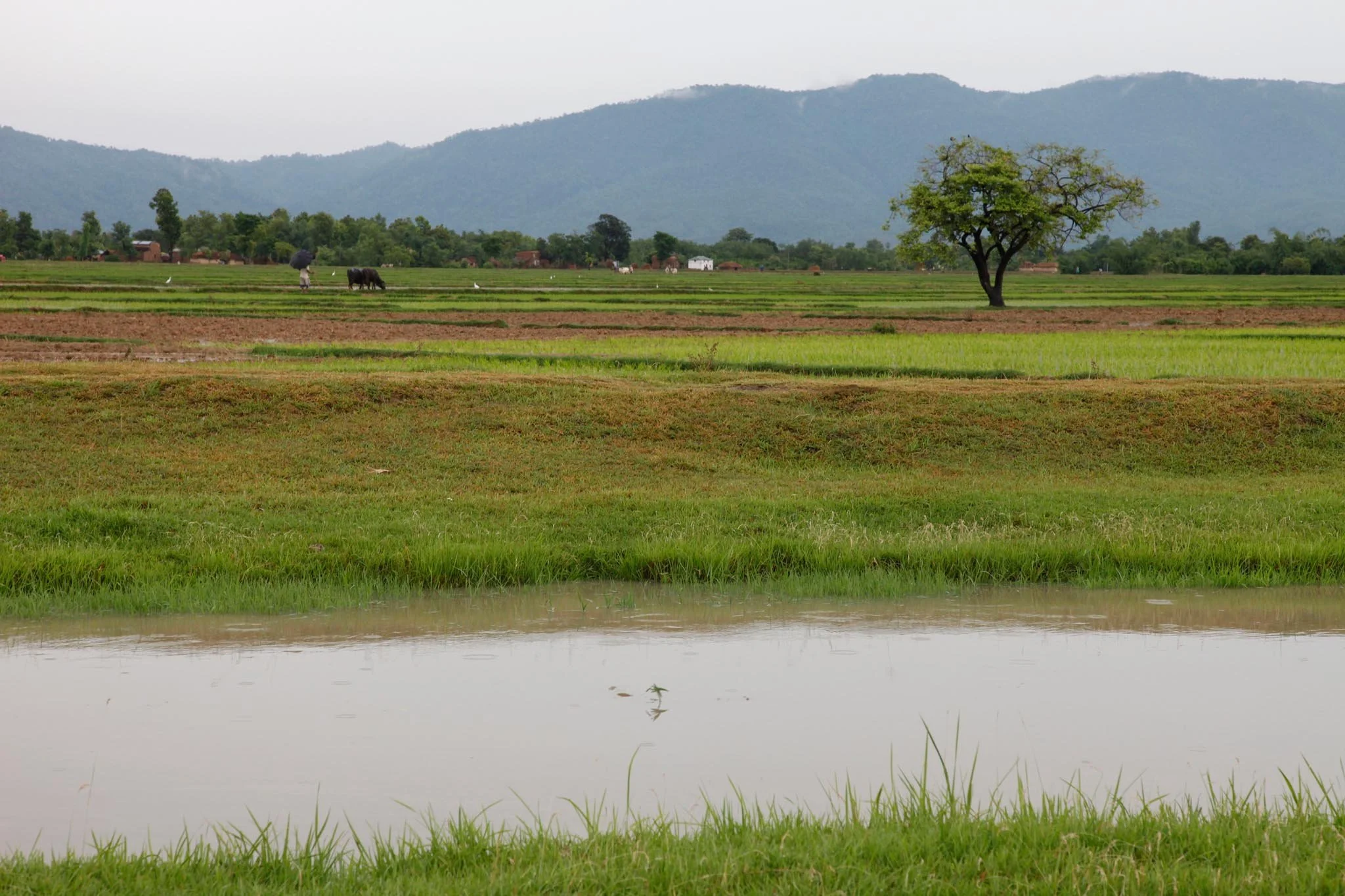
Climate Change Is Not A Theory Here.
It Is A Landscape. A Community. A Conversation. A Living Classroom.
Few places on Earth reveal the realities of climate change as clearly as the Himalayas.
Glaciers are changing.
Water systems are shifting.
Mountain communities are adapting.
Biodiversity is responding.
Traditional knowledge is evolving alongside new scientific understanding.
For universities seeking meaningful environmental education, Nepal offers an extraordinary opportunity to study climate change where its impacts, challenges and solutions are experienced every day.
Location Nepal Global Learning partners with universities to create customized faculty led programs that connect students with landscapes, researchers, communities and professionals working at the forefront of Himalayan environmental change.
WHY STUDY CLIMATE CHANGE IN NEPAL?
One Country. Extraordinary Perspectives.
The Himalayas are often described as Earth's Third Pole because they contain one of the largest reserves of snow and ice outside the polar regions.
The region supports hundreds of millions of people through rivers originating in these mountains and provides an exceptional setting for understanding environmental systems, human adaptation and global sustainability.
Students studying in Nepal can examine the relationships between:
Mountain environments.
Climate systems.
Water resources.
Biodiversity.
Agriculture.
Tourism.
Urban growth.
Traditional livelihoods.
Renewable energy.
Community resilience.
Rather than learning through textbooks alone, students engage directly with landscapes and people experiencing environmental change.
NEPAL AS A LIVING CLIMATE LABORATORY
Learning Through Observation, Research And Experience
Nepal offers opportunities to explore environmental change across remarkably diverse landscapes.
Within a relatively short distance, students can experience:
High Himalayan environments.
Glacial valleys.
Mid hill communities.
River systems.
Forests.
Agricultural landscapes.
Protected areas.
Rapidly growing cities.
This diversity creates opportunities for interdisciplinary learning that connects science, geography, ecology, policy and community experience.
Students are encouraged to ask questions, make observations and understand how local realities connect to global environmental challenges.
WHAT STUDENTS CAN EXPLORE
Connecting Academic Theory With Real World Experience
Climate Science
Explore mountain climate systems and the environmental processes shaping Himalayan landscapes.
Glaciers And Snow
Understand the importance of glaciers, seasonal snow and long term environmental change.
Water Resources
Examine the relationship between mountains, rivers, communities and regional water security.
Biodiversity
Study how changing environments influence ecosystems, wildlife and conservation.
Community Adaptation
Learn how mountain communities respond to changing environmental conditions through innovation, resilience and traditional knowledge.
Sustainable Development
Explore the balance between environmental protection, economic opportunity and community wellbeing.
Environmental Communication
Understand how photography, filmmaking and storytelling can communicate environmental issues to wider audiences.
LEARNING THROUGH PEOPLE
Communities Are Partners In Learning
Climate change is ultimately a human story.
Students gain valuable perspectives by engaging respectfully with communities whose lives are shaped by changing environmental conditions.
Depending on program objectives, opportunities may include interaction with:
Mountain communities.
Farmers.
Conservation practitioners.
Researchers.
Environmental organizations.
Protected area professionals.
Community leaders.
Educators.
These conversations encourage students to understand environmental change through lived experience as well as scientific knowledge.
A MULTIDISCIPLINARY LEARNING EXPERIENCE
Climate Change Connects Many Academic Disciplines
This program can support a wide range of university departments.
Including:
Environmental Science.
Climate Science.
Geography.
Ecology.
Conservation Biology.
Sustainability.
Development Studies.
International Relations.
Public Policy.
Anthropology.
Journalism.
Photography.
Film Studies.
Architecture.
Engineering.
Public Health.
Because climate change affects every aspect of society, students benefit from interdisciplinary perspectives.
FIELD EXPERIENCES
Every Program Is Designed Around Your Academic Goals
Examples Of Learning Experiences
Mountain landscape observation.
Environmental field discussions.
Community engagement.
Protected area visits.
Guest lectures.
Research centre visits.
Photography and visual documentation.
Reflection workshops.
Student presentations.
Independent field projects.
Collaborative learning activities.
Every program is customized according to learning outcomes, faculty priorities and available time.
LOCATION NEPAL LEARNING NETWORK
Connecting Students With Knowledge Across Nepal
Location Nepal Global Learning collaborates with a growing network of professionals whose experience enriches field learning.
Depending on the academic focus, students may engage with:
Environmental researchers.
Scientists.
Protected area professionals.
Conservation practitioners.
Community organizations.
Local leaders.
Creative communicators.
Photographers.
Filmmakers.
Policy specialists.
Our role is to create meaningful connections between academic learning and Nepal's diverse knowledge systems.
OUR EXPERIENCE IN THE HIMALAYAS
Built Upon Years Of Field Experience
Location Nepal Global Learning builds upon more than two decades of experience working throughout Nepal's mountains, protected areas and remote communities.
Our work draws upon the wider expertise of the Location Nepal network, including long term visual documentation, environmental storytelling, international production support and collaborations with researchers, conservation practitioners and local communities.
This experience provides valuable local knowledge that helps universities create meaningful and responsibly delivered field programs.
WHO THIS PROGRAM IS FOR
Designed For Universities Seeking Meaningful Environmental Learning
Suitable For
Faculty Led Programs.
Environmental Science Departments.
Geography Departments.
Climate Research Programs.
Sustainability Studies.
International Education Offices.
Graduate Schools.
Undergraduate Programs.
Research Institutions.
Interdisciplinary Learning Initiatives.
CUSTOMIZE YOUR PROGRAM
Every University Has Different Learning Goals
No two academic programs should be identical.
Location Nepal Global Learning works collaboratively with faculty members to design programs that reflect:
Academic objectives.
Student level.
Research interests.
Program duration.
Season.
Preferred regions.
Learning outcomes.
Institutional priorities.
Programs may range from short intensive field experiences to extended research focused academic journeys.
FREQUENTLY ASKED QUESTIONS
Is this a fixed itinerary?
No.
Every climate program is developed in collaboration with faculty members and tailored to academic objectives.
Can research activities be included?
Yes.
Programs can incorporate field observations, research discussions, environmental monitoring, community engagement and independent student projects where appropriate.
Which students benefit most from this program?
Students studying environmental science, geography, sustainability, ecology, conservation, development studies, journalism, media, engineering and related disciplines.
Can the program include remote mountain regions?
Yes.
Programs can be designed for different regions depending on academic objectives, accessibility, season and available time.
Does Location Nepal provide operational support?
Yes.
We support faculty members through program planning, local coordination, field logistics, community engagement and on the ground operational management.
RELATED PROGRAMS
Students interested in this program may also explore:
Wildlife Conservation And Biodiversity
Anthropology And Cultural Studies
Public Health And Mountain Communities
Sustainable Tourism And Community Development
Documentary Filmmaking And Visual Storytelling
Independent Research And Capstone Projects
Let's Explore The Future Together
Climate change is one of the defining challenges of our time.
Understanding it requires more than lectures.
It requires observation.
Conversation.
Curiosity.
Field experience.
Location Nepal Global Learning helps universities create academic programs where students engage directly with Himalayan environments, mountain communities and the people working toward a more sustainable future.
If your department is considering a climate focused field course, environmental studies program or interdisciplinary learning experience in Nepal, we would welcome the opportunity to begin the conversation.
Together, we can create a program that is academically rigorous, professionally managed and deeply meaningful.
The Himalayas are among the world's most important classrooms for understanding climate change.
Location Nepal Global Learning connects universities with Nepal's landscapes, communities and knowledge systems to create learning experiences that inspire scientific curiosity, critical thinking and global responsibility.
Nepal is the Classroom.
Experience is the Curriculum.