

NGO Documentary Photography in Nepal
NGO Photography Nepal
Visual Documentation for Organisations Working on the Ground
The work of an NGO, INGO, development organisation, humanitarian agency or conservation organisation often happens far from where its audiences, donors and decision makers are.
Photography helps bring that work into view.
Location Nepal provides professional photography and visual production support for international organisations working across Nepal, from Kathmandu to remote communities, from the Terai to the high Himalayas.
We document programmes, people, communities, environments and change with an understanding that these images may serve very different purposes.
They may become part of a donor report, annual report, campaign, website, publication, social media programme, fundraising appeal, advocacy initiative, research project, exhibition or long term visual archive.
The assignment therefore needs to be planned around more than taking good photographs.
It needs to understand what the organisation is trying to communicate, who the audience is, what evidence is required, what stories need to be documented and how the images will be used afterwards.
Our experience combines photography, documentary production, journalism, field logistics, environmental and conservation documentation and international production management.
That allows us to work with organisations at both ends of the spectrum.
A photographer may need to spend several days documenting one community.
A global organisation may need a multi location visual documentation programme involving several teams.
A humanitarian project may require rapid deployment to a difficult field environment.
A long term development programme may require consistent photography across months or years.
We build the assignment around the actual requirement.
Your organisation is doing the work. We help make that work visible, understood and remembered.
Photography That Understands the Work
Documenting Programmes, Not Just People
NGO photography requires an understanding of what is happening beyond the frame.
A strong image may show a person, but the assignment may actually be about a livelihood programme, a health intervention, an education initiative, climate adaptation, food security, disaster resilience, conservation or community development.
We take time to understand that context before photographing it.
Before an assignment, we can work with the organisation to understand:
The programme and its objectives
The communities involved
Key people and stories
Geographic areas
Programme activities
Required visual evidence
Communication objectives
Donor or reporting requirements
Safeguarding considerations
Consent requirements
Cultural considerations
Image usage and delivery requirements
This allows the photography to document the work rather than simply illustrate it.
A programme may require portraits, activity photography, environmental context, details, landscapes, facilities, infrastructure, group photographs, interviews or documentary sequences. We can plan for the complete visual story.
The same image may need to work for a donor report, website, campaign, social media post and publication. That means thinking about composition, orientation, resolution, context and usage before the shutter is pressed.
For longer assignments, we can also develop a consistent visual approach across multiple locations and field teams so that the resulting collection feels like one body of work rather than a series of unrelated assignments.
The best NGO photography does not simply show what happened. It helps people understand why it matters.
Field Documentation Across Nepal
From Kathmandu to the Most Remote Communities
NGO and development work in Nepal often extends far beyond the major cities. Programmes can operate across provinces, districts, mountain settlements, Terai communities, forests, agricultural areas, schools, health facilities and places that may require hours or days of travel to reach.
We can plan photography assignments around those realities.
This may include:
Kathmandu Valley
Terai communities
Hill districts
Mountain settlements
High altitude locations
Rural villages
Schools and educational programmes
Health facilities
Agricultural communities
Livelihood projects
Water and sanitation programmes
Climate adaptation projects
Disaster affected areas
Conservation landscapes
Community forests
Cultural and heritage sites
Urban communities
Industrial and labour environments
We can organise single location assignments or multi district documentation programmes, with travel, accommodation, local transport, field assistants, translators, community liaison and production scheduling built around the assignment.
For remote locations, preparation becomes particularly important. Weather, road conditions, altitude, local access, communications and available accommodation can all affect what is realistically possible.
We assess these conditions before the assignment so that the photography plan reflects the actual field environment.
Where an organisation has programmes across several regions, we can also coordinate a structured documentation schedule to maximise field time and maintain consistency across the resulting image collection.
The work may be spread across Nepal. The visual documentation can remain coherent from beginning to end.
Ethical Photography & Safeguarding
Respect Comes Before the Photograph
Photography in development and humanitarian settings carries responsibilities that are different from ordinary commercial assignments.
People may be photographed during difficult circumstances, while receiving services, participating in programmes or sharing deeply personal experiences. The way those images are created, described and used matters.
We approach assignments with consideration for dignity, informed participation, privacy, cultural context and the organisation's safeguarding requirements.
Depending on the project, this can include:
Informed consent
Participant privacy
Child safeguarding
Sensitive subject handling
Identity protection where appropriate
Cultural considerations
Appropriate representation
Community context
Secure image handling
Responsible captions and metadata
Organisational safeguarding protocols
Careful location and interview arrangements
We work with the organisation's established policies and requirements rather than assuming that one approach is appropriate for every assignment.
This becomes particularly important when documenting children, displaced communities, survivors of disasters, people experiencing poverty, health related programmes or other situations where the image may carry consequences for the person photographed.
The objective is not to make the subject appear more vulnerable than reality.
It is to document people and programmes honestly, respectfully and with enough context for the audience to understand what they are seeing.
Good NGO photography should preserve dignity while still communicating the reality of the work.
The people in the photograph are not the means to the story. They are the reason the story matters.
Programme & Impact Documentation
Showing What Changed
NGO photography is often commissioned to document more than an activity. It needs to help communicate what the activity means and, where appropriate, what has changed because of it.
We can photograph programmes across their different stages, creating a visual record that connects people, activities, places and outcomes.
This may include:
Programme implementation
Community activities
Training and workshops
Education initiatives
Health programmes
Livelihood development
Agriculture and food security
Water and sanitation
Climate adaptation
Disaster preparedness
Recovery and reconstruction
Conservation
Infrastructure
Entrepreneurship
Skills development
Community leadership
Long term social change
The strongest documentation often combines different types of images.
A portrait introduces the person.
An observational photograph shows what they are doing.
A wider image establishes the environment.
Details provide evidence of the work.
A sequence can show a process or transformation.
Together, these images create a much stronger understanding of a programme than a collection of isolated activity photographs.
For organisations documenting programmes over several years, we can also help establish a consistent visual language and archive so that change can be followed across time.
This is particularly valuable when the organisation needs to communicate not only what it is doing, but what that work looks like in the lives of the people and communities involved.
Impact is often difficult to photograph directly. We document the people, places and changes through which it becomes visible.
Stories for Donors, Reports & Campaigns
One Assignment. Many Uses.
NGO photography rarely ends when the photographer leaves the field. The resulting images may be used across an organisation for years and by completely different teams.
A single documentation assignment may need to serve:
Donor reports
Annual reports
Programme reports
Websites
Social media
Fundraising campaigns
Advocacy campaigns
Press releases
Media outreach
Newsletters
Publications
Presentations
Conferences
Exhibitions
Educational material
Internal communications
Digital archives
We plan the photography with these potential uses in mind.
That means creating a balanced collection rather than returning with only a series of attractive portraits or activity photographs.
Depending on the brief, we can provide a combination of horizontal and vertical images, portraits, environmental photographs, details, wider contextual images, documentary sequences and photographs suitable for different communication formats.
Where required, we can also work alongside the organisation's communications or editorial team so that the visual documentation responds directly to the reporting and communication objectives.
For international organisations working across several programmes or countries, consistency can also be important. We can follow an established visual direction or develop a coherent approach for a Nepal wide documentation programme.
The objective is to create a body of work that remains useful long after the original assignment.
Good NGO photography should not be useful for one report. It should keep working for the organisation.
Beyond Stills
Photography, Film & Complete Visual Documentation
Many organisations now need more than a set of photographs. A single field assignment may require still photography, interviews, short films, social media content, aerial imagery and documentary material for different audiences.
Location Nepal can structure the visual production around those needs.
Depending on the assignment, this can include:
Documentary photography
Programme photography
Portrait photography
Photojournalism
Interview filming
Short documentary films
Social media video
Campaign films
Aerial photography
Drone filming
Environmental photography
Timelapse
Behind the scenes documentation
Audio and interview recording
Multimedia storytelling
The same field visit can sometimes be planned to produce several forms of content without turning the programme into a large film production.
For larger assignments, dedicated photography and film teams can work together so that stills and moving images are produced consistently and without compromising either.
For smaller organisations, we can design a leaner operation where one experienced visual team produces the essential material across several formats.
This is particularly useful when communications teams need a complete visual package from one programme visit rather than having to organise separate productions for photography and video.
The creative approach remains documentary and human centred, while the production is structured around how the organisation will actually use the material.
One field visit can tell many stories. We build the visual production to capture them.
Experience Behind the Camera
Photography Shaped by Years of Field Work
Gautam Dhimal has spent years working across Nepal and internationally as a photographer, filmmaker and producer, documenting people, communities, environments, culture and change.
His work has taken him into very different working environments, from urban assignments to remote field locations, and across projects involving international organisations, broadcasters, brands, development work, environmental documentation and conservation.
That experience matters in NGO photography because the assignment rarely follows a studio production model.
The photographer needs to understand the programme, the people, the environment and the communication objective while also being prepared for the practical realities of field work.
Gautam's experience in production management adds another layer to that understanding.
He knows what needs to happen before the photographer arrives, how to work with local teams, how to manage difficult logistics, how to prepare for changing conditions and how to maintain a professional production while remaining unobtrusive around the people being documented.
His photographic work has also received international recognition, including Third Prize in the Fashion / Advertising category at the International Photography Awards 2022, while his wider career spans documentary, environmental, humanitarian, editorial, travel and conservation related visual work.
Through Location Nepal, this experience is supported by a broader network of photographers, filmmakers, researchers, translators, field professionals and regional production specialists.
The result is not simply access to a photographer.
It is access to an experienced visual production system built around the realities of working in Nepal.
Good field photography requires both an eye for the image and an understanding of everything happening around it.
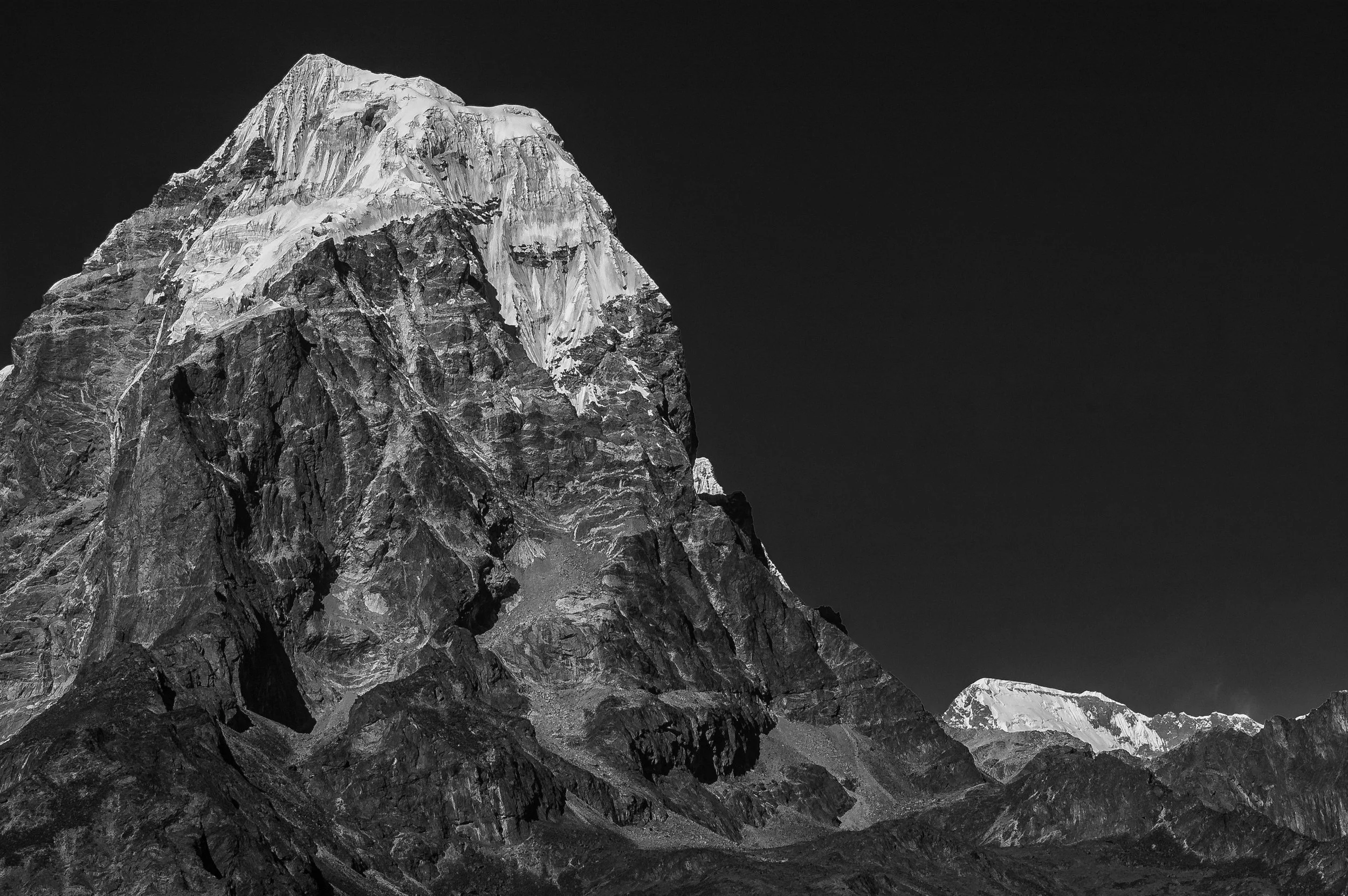
Producing the Most Ambitious Aerial Archive of the Himalayas
Seeing the Himalayas at a Scale Never Before Documented
Some landscapes are too vast to understand from the ground.
The Himalayas are one of them.
Gautam Dhimal is developing a long term aerial documentation initiative to create an exceptionally detailed visual archive of the Himalayan landscape, using ultra high resolution medium format aerial photography to document mountains, glaciers, valleys, settlements, rivers and changing environments at an extraordinary level of detail.
The ambition goes beyond creating beautiful aerial photographs.
It is about building a visual record.
A record that can support environmental research, climate science, conservation, education, journalism, publishing, cultural documentation and public understanding of one of the world's most important and rapidly changing landscapes.
The project brings together aerial photography, advanced imaging technology, helicopter based field production, scientific and environmental interests and long term archival thinking.
Rather than producing isolated aerial images, the aim is to build a geographically and visually connected archive that can continue to grow across the Himalayas over many years.
This is a production undertaking requiring careful planning, aviation coordination, specialist equipment, high altitude preparation, weather assessment, flight planning, data management and enormous amounts of post production and archival work.
The resulting material is intended to become more than a collection of photographs.
It is being conceived as a resource.
For scientists who need visual evidence.
For conservationists monitoring fragile landscapes.
For researchers studying environmental change.
For educators introducing future generations to the Himalayas.
For publishers and filmmakers requiring extraordinary visual material.
And for communities and institutions seeking to preserve a visual record of a landscape that is changing faster than many people realise.
The archive is being developed from Nepal, with the ambition of eventually extending across the Himalayan region.
The Himalayas have been photographed countless times. We are building an archive designed to document them differently, in extraordinary detail and for generations to come.
Producing the Most Ambitious Aerial Archive of the Himalayas
Visual Evidence for a Changing Nepal
Images That Can Become Part of the Record
For organisations working on climate change, disaster resilience, conservation, water, agriculture, livelihoods, infrastructure and environmental change, conventional ground photography can only show part of the picture.
Aerial imaging can provide another perspective.
It can reveal relationships between communities and their landscapes, changing river systems, glacial environments, agricultural patterns, infrastructure, settlement expansion, damaged landscapes and areas undergoing environmental transformation.
This creates possibilities for visual documentation that can complement field reports, research, mapping, scientific observation and programme communications.
The aerial archive being developed by Gautam Dhimal can therefore become relevant to organisations working across many different areas, including:
Climate adaptation
Glacier and cryosphere research
Water resources
Disaster risk reduction
Conservation
Biodiversity
Agriculture
Rural development
Infrastructure
Urban expansion
Environmental restoration
Community resilience
Cultural landscape documentation
Disaster response and recovery
Environmental education
The objective is not to replace scientific data or formal mapping.
Photography provides something different: an extraordinarily detailed visual record of what a landscape looks like at a particular point in time.
Repeated over years and across locations, those images can become increasingly valuable.
For NGOs and development organisations, this opens another possibility: commissioning aerial documentation alongside ground based photography and film to create a more complete visual understanding of a programme, landscape or environmental issue.
Sometimes the clearest way to understand a community is to see the landscape around it.
Commissioned Aerial Documentation
Building the View You Need
The Himalayan aerial archive is a long term initiative, but organisations do not necessarily need to wait for an existing image to appear in the collection.
Where appropriate, specific aerial documentation can be developed around an organisation's programme, research requirement or geographic area of interest.
This may involve documenting:
A project area before intervention
Landscape transformation over time
Glacier and snow environments
Rivers and watersheds
Agricultural landscapes
Forest and conservation areas
Rural settlements
Infrastructure projects
Disaster affected areas
Climate adaptation projects
Environmental restoration
Cultural landscapes
Remote communities
Programme locations and surrounding environments
A commissioned assignment can be planned around the geography, season, required viewpoints and intended use of the imagery.
Where helicopter based photography is appropriate, flight planning and aviation coordination become part of the production. Where drone operations are suitable and permitted, those can also be considered.
The choice of platform depends on the purpose of the documentation, the location, altitude, weather, required resolution and applicable aviation and safety requirements.
For organisations working over several years, repeated aerial photography can also be considered as part of a longer term visual monitoring programme, creating comparable imagery from the same or carefully selected locations over time.
The result is not simply an aerial photograph for a report.
It can become part of a much larger visual record of the landscape in which the organisation is working.
If the landscape is part of your story, we can help document it from a perspective the ground cannot provide.
Long Term Visual Documentation
Building an Archive, Not Just Delivering an Assignment
Some programmes run for years.
Their stories change with every season, every phase of implementation and every generation of people involved. A single photography assignment can capture a moment, but a structured visual documentation programme can show the journey.
We can work with organisations to develop longer term photography programmes across Nepal, creating a consistent body of visual material over time.
This can involve:
Baseline documentation
Annual programme photography
Follow up assignments
Before and after documentation
Multi year impact stories
Seasonal documentation
Multiple programme locations
Staff and beneficiary portraits
Environmental change
Infrastructure development
Community transformation
Programme milestones
Long term visual archives
A long term approach also allows the photography to become more thoughtful.
The first visit may establish the people, places and context.
Later visits can return to the same communities and observe what has changed, what has remained and what has emerged that could not have been understood during the initial assignment.
For organisations operating across several regions, we can maintain a consistent visual approach while allowing each community and programme to remain distinct.
The resulting archive can serve communications teams today while becoming an increasingly valuable historical record in the future.
This is particularly relevant for organisations working on climate, development, conservation, education, health, livelihoods and social change, where the real impact often becomes visible over years rather than weeks.
A photograph records a moment. A well built archive can record change.
Complete Production Support
The Photography Is Only One Part of the Assignment
A successful field photography project depends on everything surrounding the photographer.
Location Nepal can manage the practical production requirements so that the photographer can concentrate on the work itself and the organisation does not have to coordinate multiple local suppliers.
Depending on the assignment, this can include:
Production management
Location research
Local fixers
Field producers
Community liaison
Translators and interpreters
Local photographers
Additional camera crews
Equipment coordination
Ground transportation
Accommodation
Field assistants
Permits and access
Health and safety
Risk assessment
Emergency planning
Data management
Image backup
Secure file transfer
Production documentation
For a simple Kathmandu assignment, the operation can remain deliberately small.
For a multi location programme, we can coordinate regional teams, advance research, extended travel, multiple photographers and larger production crews under one production structure.
International organisations can also bring their own communications teams, photographers or creative directors. We work alongside them and provide the Nepal infrastructure required to make the assignment run smoothly.
Where specialist requirements arise, we draw from our wider professional network rather than expecting one person to perform every role.
The result is a production that is prepared before the fieldwork begins, responsive while it is happening and properly wrapped once the photography is complete.
You should be thinking about the story, not wondering who is arranging the vehicle tomorrow morning.
Health, Safety & Field Preparedness
Good Photography Begins With Good Preparation
NGO photography can take a photographer into places that are difficult to reach and environments that can change quickly. Roads, weather, altitude, terrain, communications and access can all affect an assignment.
We plan around those realities before the photographer enters the field.
Depending on the location and programme, preparation can include:
Field risk assessment
Route and travel planning
Weather monitoring
Altitude considerations
Medical and first aid arrangements
Emergency communication
Rescue and evacuation planning
Appropriate vehicles and drivers
Local field support
Accommodation assessment
Security considerations
Equipment safety
Data protection
Contingency planning
The requirements for a Kathmandu based assignment are obviously different from those of a multi day field visit in a remote Himalayan community. We therefore assess the actual circumstances of each assignment rather than applying a generic field checklist.
Health and safety also extends to the people being photographed.
Sensitive communities, children, disaster affected populations and people facing difficult circumstances may require additional safeguards, privacy considerations and careful coordination with the organisation's own policies.
The objective is to allow the photographer to work confidently while ensuring that the people, equipment and production are properly considered throughout the assignment.
Preparation does not make field photography less adventurous. It makes it possible to work responsibly when the field becomes unpredictable.
Image Delivery & Archival Management
Creating a Useful Visual Resource
The end of a photography assignment is not the end of the work. An organisation may need to use the photographs for years, across teams, programmes and communication platforms.
We can structure delivery around the organisation's existing workflow and intended use of the material.
Depending on the assignment, this can include:
Carefully edited image collections
High resolution master files
Web ready versions
Portrait and landscape selections
Caption and metadata information
Location and subject documentation
Image organisation by programme or location
Secure digital delivery
Backup and archival copies
Long term image storage
Selection support for reports and publications
Image libraries for communications teams
For larger documentation programmes, a consistent naming, captioning and organisational system can be developed so that images remain searchable and useful long after the original assignment.
Where appropriate, we can also help organisations think through the difference between an image created for immediate communication and an image that should be preserved as part of a long term institutional archive.
Rights and usage can be structured according to the assignment and the organisation's requirements, with the intended applications discussed before production wherever possible.
The goal is to leave the organisation with more than a folder of photographs.
It should have a visual resource that people can find, understand, use and return to.
The best archive is not simply the one with the most images. It is the one where the right image can still be found years later.
Who We Work With
Visual Documentation for Organisations Working Across Nepal
Our photography and visual production services can support organisations at very different scales, from a small local programme requiring a single field assignment to an international organisation documenting work across multiple provinces.
We work with and support:
NGOs
INGOs
UN agencies
Development organisations
Humanitarian organisations
Foundations
Charities
Conservation organisations
Research institutions
Universities
Academic programmes
Government and public institutions
International development agencies
Climate organisations
Environmental organisations
Community based organisations
Social enterprises
Advocacy organisations
Human rights organisations
Media and communications teams
The assignment may come directly from the organisation or through an international communications agency, production company, photographer, filmmaker or editorial team working on its behalf.
We can adapt to existing procurement, communications, safeguarding and reporting systems and coordinate with the people responsible for the programme and the final communications output.
For organisations already working across Nepal, we can also become a continuing local visual production partner rather than treating every assignment as a completely separate engagement.
That means the organisation can build familiarity, consistency and institutional knowledge into its visual documentation over time.
Wherever the work is happening, the visual documentation should understand the work.
Why Location Nepal for NGO Photography
Photography Supported by Production Experience
Professional NGO photography requires more than a talented photographer.
It requires someone who can understand the programme, work respectfully with communities, adapt to difficult field conditions, communicate with an international team and return with imagery that actually serves the organisation.
Location Nepal brings those capabilities together.
Our experience spans photography, documentary production, journalism, environmental documentation, conservation, field logistics, production management and international assignments across Nepal and beyond.
Gautam Dhimal brings the photographic and production experience at the centre of this work, supported by a wider network of photographers, filmmakers, researchers, translators, field professionals and regional specialists.
That network allows us to build the right team around each assignment rather than forcing every project into one production model.
It also means we can work across very different environments, from a short urban documentation assignment to a multi week expedition into remote communities.
Our developing aerial archive of the Himalayas adds another dimension to this visual work, creating possibilities for organisations working on climate, conservation, development, disaster resilience and environmental change.
Most importantly, we understand that NGO photography is ultimately about communication.
The images need to be accurate, respectful, useful and strong enough to carry the story long after the photographer has left the field.
We do not simply photograph the work. We take the time to understand it, prepare for it and build the production around it.
Frequently Asked Questions
NGO Photography & Visual Documentation in Nepal
Do you provide photography for NGOs and INGOs in Nepal?
Yes. We provide professional photography and visual production support for NGOs, INGOs, UN agencies, development organisations, humanitarian agencies, foundations, conservation organisations and research institutions working across Nepal.
Can you document an entire programme rather than just one event?
Yes. We can develop documentation around a programme, including people, activities, locations, infrastructure, environmental context and outcomes.
Can you work across multiple districts or provinces?
Yes. We can plan multi location assignments across Nepal, including remote and difficult to reach areas.
Can you work with our communications or programme team?
Absolutely. We can work directly with communications, programme, monitoring, research and field teams to understand what the photography needs to communicate.
Can you follow an existing organisational photography or brand guideline?
Yes. We can work within an existing visual direction, technical specification, safeguarding policy, consent process and communications framework.
Can you provide both photography and video?
Yes. Depending on the assignment, we can coordinate still photography, documentary video, interviews, short films, social media content, aerial imagery and other visual formats.
Can you provide local photographers outside Kathmandu?
Yes. We can coordinate photographers and field production teams according to the location, subject and requirements of the assignment.
Can you arrange translators and local fixers?
Yes. Language support, community liaison, local researchers, fixers and field assistants can be arranged according to the assignment.
Can you photograph vulnerable communities?
Yes, with appropriate safeguards. Sensitive assignments require careful consideration of informed participation, privacy, dignity, safeguarding and the potential consequences of publication.
Can you photograph children?
Yes, subject to appropriate consent, safeguarding procedures and the organisation's policies and requirements.
Can you work in remote Himalayan locations?
Yes. Remote assignments can be planned with appropriate transport, accommodation, field support, health and safety preparation, communications and contingency arrangements.
Can you provide aerial photography for NGO projects?
Yes. Aerial photography can be considered where it is appropriate, permitted and safe. We also have a long term initiative developing an extensive high resolution aerial archive of the Himalayas.
Can you arrange helicopter based aerial photography?
Where appropriate, helicopter operations can be explored and coordinated subject to aviation requirements, weather, safety and operational feasibility.
Can you handle equipment brought from overseas?
Yes. Where international equipment is required, the appropriate production, documentation, temporary import and customs requirements can be planned in advance.
Can you provide images suitable for donor reports and publications?
Yes. We can plan and deliver imagery for reports, websites, campaigns, publications, presentations, social media, exhibitions and long term archives.
Can you provide captions and metadata?
Yes. Captioning, image organisation, metadata and delivery structures can be incorporated into the assignment according to the organisation's requirements.
Can you undertake long term documentation?
Yes. We can develop recurring or multi year visual documentation programmes, including baseline photography, follow up assignments and before and after documentation.
Can you work with international photographers or communications teams?
Yes. We can provide the local production infrastructure around an international photographer, filmmaker, communications team or creative agency.
How early should an NGO contact you?
As early as possible. Early planning allows us to understand the programme, identify locations and people, coordinate permissions and access, plan travel and build the most appropriate field operation.
How do we begin an assignment?
Send us the programme details, locations, approximate dates, objectives and the type of visual material you need. We can then develop the appropriate photography and production plan around the assignment.
Document Your Work in Nepal
Make the Work Visible
Your programmes are reaching people, changing communities, protecting environments and creating stories that deserve to be seen properly.
Whether you need a single photographer, a multi location documentation team, long term visual coverage, photography and film, or specialist aerial documentation, we can build the production around your requirements.
Tell us what you are documenting, where the work is happening, who you need to reach and how the imagery will be used.
We will help determine the people, preparation, logistics, production and visual approach required.
From one field visit to a national visual archive, let us build the right documentation for your work.
Show your impact.