Documentary Photography Services for NGOs in Nepal
NGO & Nonprofit Photography and Film in Nepal
The Work Happens in the Field. So Does the Story.
An NGO can spend years building a programme, working with communities, training health workers, protecting a forest, supporting farmers, improving water access, responding to a disaster or helping a child stay in school. Yet when that work has to be explained to a donor, presented in an annual report, shared with a global audience, used in a campaign or remembered years later, much of it eventually comes down to what can be seen.
That is where we come in.
Location Nepal works with organisations that need more than photographs taken during a visit. We help turn fieldwork into a visual record: people at work, families and communities, programmes in action, landscapes changing, problems being addressed, solutions being built and the people behind the numbers. Photography, documentary film, interviews, aerial imagery, sound and location documentation can all become part of the same assignment.
Our experience comes from actually working in these environments. Gautam Dhimal has spent decades photographing and producing stories across Nepal and internationally, while Location Nepal brings the production infrastructure needed to reach places where the work is happening. From remote Himalayan communities and the Terai to border regions, forests, farms, industrial landscapes and urban settlements, we understand that the most important part of the assignment often begins where the road ends.
One of the clearest examples is Vicks Road to Relief, an Australia and New Zealand campaign produced in collaboration with UNICEF. The Nepal production took us from remote communities along the Indo Nepal border into high altitude Himalayan environments, requiring locations, permits, casting, transport, charters, equipment, crew and extensive field logistics. We delivered the Nepal production at cost to cost because the purpose mattered. The campaign ultimately helped deliver two million vaccinations to children in developing countries.
Other work takes a very different path. Brick By Brick follows migrant workers and their families through the brick kiln industry across Nepal and India, looking simultaneously at labour, migration, children, women, working conditions, air pollution, soil degradation, deforestation and climate impact. It is documentary photography, but it is also a visual record of development, environment and human lives intersecting in one place.
Our work also extends into climate change, biodiversity, water, agriculture, food systems, health, education, livelihoods, migration, gender, youth, human rights, cultural change, disaster and resilience. Projects such as Until We Act look at the larger environmental questions facing the Himalayas, while other assignments may begin with one family, one farmer, one school, one workplace or one community.
The subject changes. The responsibility does not.
We believe NGO and nonprofit photography should never reduce people to symbols of poverty or suffering. Ethical storytelling means understanding the people being photographed, protecting dignity, respecting informed participation and giving the audience enough context to understand what they are seeing. This is especially important when working with children, displaced people, survivors, vulnerable communities or anyone whose image could create risk. These principles are also reflected in the ethical imagery guidance used by organisations such as UNICEF and UNHCR.
The result should be imagery that does something useful. A photograph that helps a donor understand. A film that allows a programme officer to explain a project. A portrait that gives a face to a statistic. A sequence that shows change over time. An aerial image that explains the scale of an environmental problem. A collection that becomes part of an annual report, funding proposal, advocacy campaign, exhibition, website, social media programme, documentary or permanent archive.
That is the kind of visual work we produce.
Not simply pictures of the work.
Pictures that help people understand why the work matters.
What Needs to Be Seen
Development Is Never Just One Story
A health programme may be about mothers and children. A climate project may be about a farmer trying to adapt to changing weather. A water programme may be about a community walking less distance to collect water. A biodiversity project may be about a forest, a species and the people protecting both. A livelihoods programme may be about women building an income, young people finding opportunity or workers facing dangerous conditions.
We photograph all of it.
Our NGO and nonprofit assignments cover health, education, food and agriculture, water and sanitation, climate change, biodiversity, conservation, environment, livelihoods, migration, labour, women and girls, children and youth, disability, disaster response, resilience, human rights, cultural heritage and community development.
Sometimes the brief is straightforward: document a programme and deliver a strong collection of photographs. Sometimes the real challenge is finding the story inside hundreds of pages of programme documents, statistics and indicators.
That is where our experience helps.
We go into the field looking for the people, places and moments that allow an audience outside the project to understand what is actually changing.
Because development is experienced by people, not by spreadsheets.
Human Stories, Without Exploiting Them
Dignity Comes Before the Picture
Some of the people we photograph are living through difficult circumstances. They may be dealing with poverty, displacement, illness, unsafe work, climate pressure, discrimination or the aftermath of disaster. Their situation may be the reason an organisation is there in the first place, but it should never become a reason to photograph them without care.
Our approach begins with listening. We take time to understand the programme, the community and the people involved before deciding what the camera needs to do. We look for ordinary moments as much as dramatic ones: a woman working, a child learning, a farmer adapting, a health worker travelling, a family preparing food, a community meeting or a young person building something for their future.
The strongest humanitarian photograph does not always show hardship. Sometimes it shows agency, dignity, resilience and change.
That matters to us because these photographs can travel much further than the original field assignment. They may appear in donor reports, campaigns, websites, exhibitions, social media, fundraising material or international publications. The person in the photograph deserves to remain a person wherever the image goes.
We do not photograph people to make them look helpless. We photograph them so they can be seen.
From Brief to Field
We Can Start Before the Camera Arrives
Good NGO photography begins long before the first photograph. We read the brief, understand the programme and its objectives, identify the people and places involved, and work out what the final visual material needs to achieve.
Location Nepal can support research, story development, location scouting, field planning, permissions, local contacts, travel, accommodation, production logistics and the photography or filmmaking itself. If the assignment covers several districts or ecological regions, we can build the movement and production schedule around the realities of Nepal rather than forcing the fieldwork into a standard itinerary.
We can also work with communications teams who already have a clear creative direction. You may simply need a trusted Nepal production partner to execute it properly on the ground.
From a one day field visit to a multi location documentary assignment, the production grows around the brief.
You do not have to arrive in Nepal with every answer. That is part of what we are here to help solve.
One Field Visit. Many Visual Outputs.
Photography Is Often Only the Beginning
A well planned field assignment can create a much larger visual library than a collection of still photographs.
Alongside documentary photography, we can produce interviews, short films, campaign videos, environmental portraits, aerial imagery, location footage, ambient sound and supporting visual material for digital platforms, publications, presentations and archives.
This becomes especially useful when an organisation is already investing in getting people into the field. The same journey can document the programme, photograph key stories, film interviews, capture landscapes and gather material for future communications.
We can also build assignments specifically for different outputs: donor reporting, annual reports, impact stories, fundraising campaigns, social media, websites, exhibitions, documentaries, educational material or long term archives.
Our role is to think about the whole visual requirement before the fieldwork begins.
One production. A visual library that keeps working long after we leave.
Nepal Is Part of the Production
The Map Does Not Tell You Everything
An NGO assignment may involve Kathmandu one week and a remote mountain district the next. A health story may require several communities. An agricultural project may follow a river basin. A climate programme may stretch from the Terai to the Himalayas. A conservation assignment may take us deep into forests where there is no convenient road, hotel or reliable mobile signal.
We have worked across these different environments for decades.
Location Nepal can handle the practical side of getting a visual team where the programme is happening: vehicles and drivers, local contacts, accommodation, field crew, equipment movement, permits, route planning, domestic travel and the unexpected problems that inevitably appear once you leave Kathmandu.
Our experience in film production, photography, remote expeditions and location management means we understand that Nepal is not one production environment. The logistics of the Terai are different from the hills. The hills are different from the high Himalayas. Monsoon changes everything.
That knowledge becomes part of the visual assignment.
We do not just photograph where the programme happens. We help you reach where the programme actually happens.
When the Story Had to Reach the Himalayas
Vicks Road to Relief
For Vicks Road to Relief, produced for Australia and New Zealand in collaboration with UNICEF, the Nepal assignment was far from a conventional commercial shoot.
The production travelled from the Indo Nepal border into Himalayan communities, following a humanitarian story around the fight against pneumonia in developing countries. Location Nepal handled the Nepal side of the operation, including locations, logistics, crew, equipment, travel and the practical problems of filming across difficult terrain.
The campaign ultimately helped raise enough support for two million vaccinations, turning a production that began with cameras and logistics into something connected to a much larger public health effort.
For us, this is what impact photography and film can do at their best. The production serves the story, and the story serves something beyond the production.
Read Gautam Dhimal's Vicks Road to Relief story
Sometimes the image is the beginning of the conversation, not the end of it.
When the Story Is Difficult
Brick by Brick
Brick by Brick took a different approach, looking at the brick kiln industry through the lives of migrant workers and their families across Nepal and India.
The story brought together labour, migration, women and children, working conditions, agriculture, air pollution, soil degradation, deforestation and climate change. Instead of treating these as separate development subjects, the project looked at how they intersect in the lives of people who depend on the industry for their livelihood.
That kind of work requires time in the field and the willingness to stay with a story after the obvious photograph has passed. It means observing work, listening to people and understanding the environment around them.
For NGO and development organisations, this is often where meaningful visual storytelling begins: not with the programme description, but with the human reality underneath it.
Read the Brick by Brick project
The photograph becomes stronger when the story behind it is understood.
Climate, Environment and Biodiversity
Documenting a Country in Transition
Nepal is experiencing environmental change at every altitude. Glaciers and high mountain landscapes are changing, forests are under pressure, wetlands are being altered, farmers are adapting to uncertain seasons, rivers are changing and communities are finding new ways to live with environmental risk.
Our work in this space combines photography, film, aerial imagery, interviews and field documentation. We can follow a single community or build a larger visual record across landscapes, watersheds, agricultural systems, biodiversity corridors and Himalayan environments.
Until We Act grew from this belief: that the Himalayas need to be documented not only as beautiful landscapes, but as evidence of a changing world.
For NGOs, INGOs, researchers, conservation organisations and climate programmes, we can build visual assignments around adaptation, resilience, biodiversity, water, food systems, habitat loss, environmental justice and the people living through these changes.
The work can be immediate, documenting a current programme, or longitudinal, returning to the same places over months or years to show what has changed.
Explore Until We Act and The Vanishing Himalayas
We photograph change while it is still possible to see it happening.
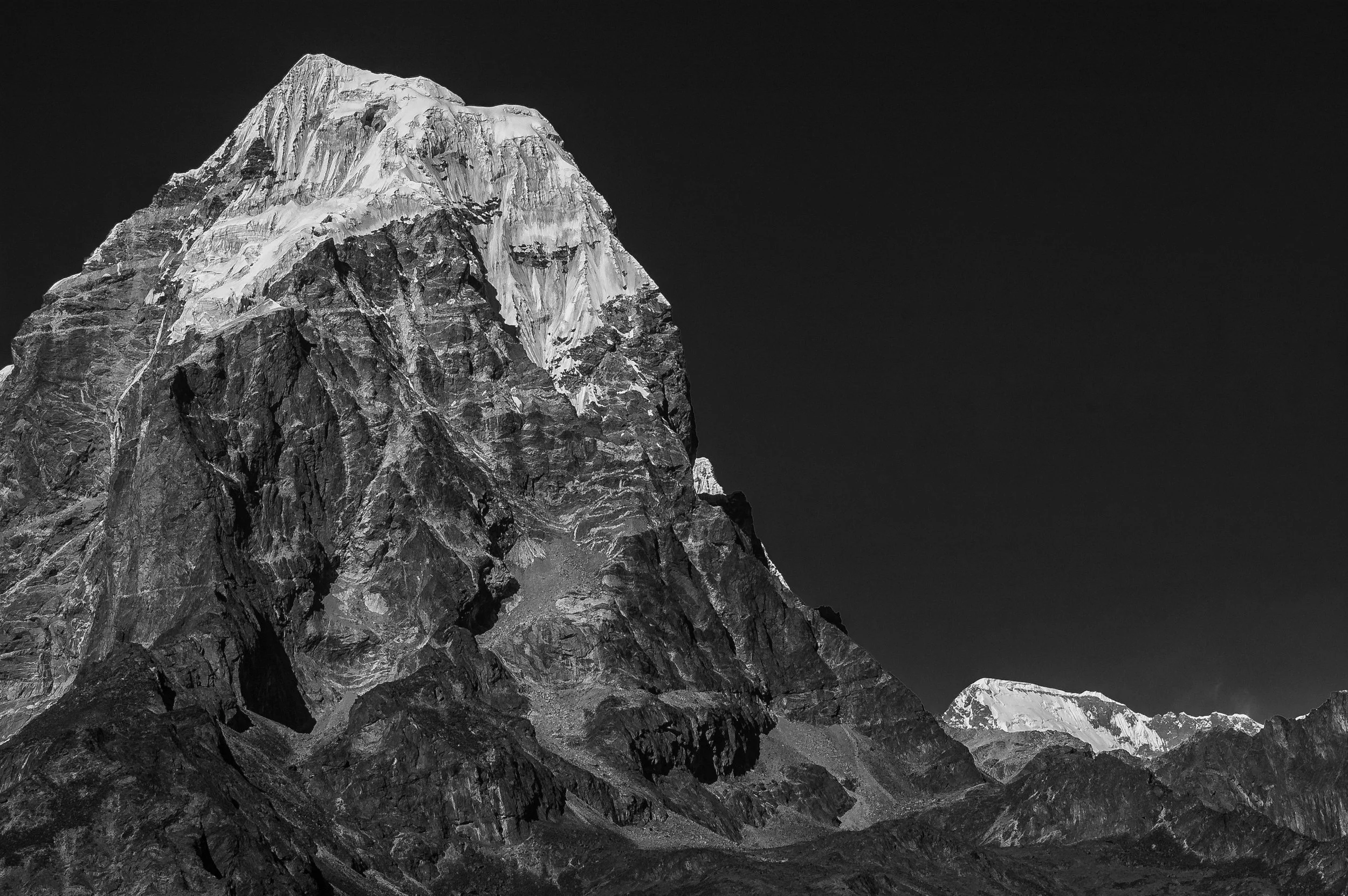
Producing the Most Ambitious Visual Archive of the Himalayas
Food, Agriculture and Water
Where Development Becomes Everyday Life
Some of the most important development stories in Nepal happen far from conference rooms. They happen on farms, beside irrigation channels, in kitchens, at water sources, in markets and along rivers.
We can document farmers adapting to changing climates, food production and livelihoods, water and sanitation programmes, irrigation, nutrition, rural enterprise, women working in agriculture, young people leaving or returning to farming, and communities dealing with drought, floods or changing access to natural resources.
These assignments often need more than a portrait. The field itself becomes part of the evidence: crops, soil, water, tools, homes, landscapes, working conditions and the people whose lives depend on them.
Location Nepal can combine documentary photography, film, interviews, aerial imagery and field logistics to create that wider picture, whether the assignment covers one community or follows a programme across several districts.
Sometimes the clearest picture of development is simply seeing how people live, work and adapt.
Health, Children, Women and Youth
The People Behind the Programme
Health and development programmes often arrive with statistics: patients reached, children vaccinated, women trained, students supported, health workers deployed. Photography gives those numbers a human scale.
We can document hospitals and health posts, community health workers, maternal and child health, vaccination programmes, nutrition, education, youth initiatives, women's livelihoods and the everyday people who make these programmes work.
Working with children and vulnerable communities requires particular care. We plan the visual approach with dignity, consent, context and safeguarding in mind, while still looking for photographs that feel alive rather than staged.
The same applies to women's stories. We look beyond the expected portrait and photograph work, decisions, leadership, entrepreneurship, family life and the changes women are creating within their communities.
For international organisations, we can also build complete field productions around these stories, including interviews, photography, film, travel and remote logistics.
A programme has numbers. A story has people. We help connect the two.
Work, Labour, Migration and Heat
The Changing World of Work
Nepal's development stories are also found in workplaces, construction sites, farms, factories, brick kilns, workshops and along the routes people take in search of employment.
We can document occupational health and safety, heat and workplace conditions, migrant labour, informal employment, women in the workforce, youth employment, changing livelihoods and the effects of climate change on people who work outdoors.
These stories often require unusual access and careful timing. A workplace may be active only at certain hours. Heat can become part of the story itself. Migration may mean following people between their homes, workplaces and communities. The visual assignment has to adapt to the lives of the people being documented rather than asking them to adapt to the camera.
Our experience in documentary photography, film production and difficult field environments helps us work within those realities.
Work is one of the clearest places to see how a society is changing.
Conflict, Disaster and Humanitarian Response
When the Situation Changes Quickly
Humanitarian photography is rarely produced under ideal conditions. Floods, landslides, earthquakes, fires, displacement, conflict, disease outbreaks and other emergencies can change access and priorities overnight.
Location Nepal can provide rapid field production support for organisations documenting response and recovery, including photographers, filmmakers, local fixers, transport, location coordination, equipment and field logistics.
Our wider production experience is particularly useful when access is difficult or when an international team needs reliable local support without spending valuable time figuring out the ground situation themselves.
We also understand the importance of restraint. Crisis photography should document what happened without turning suffering into spectacle. Sometimes the most powerful record is not the most dramatic frame, but the image that explains what people are rebuilding afterwards.
When circumstances change, the production plan has to change with them.
Long Term Documentation
One Visit Shows a Moment. Returning Shows Change.
Development work rarely happens in a single season. A new water system takes time to reach a community. A farmer changes practices over several years. A conservation programme alters a landscape gradually. A child grows through an education programme. Climate adaptation can only really be understood by watching what happens over time.
Location Nepal can support recurring photography and film assignments across months or years, maintaining local production continuity between visits.
The same communities, landscapes and programmes can be documented consistently, creating a visual record that works for impact reporting, donor communications, research, advocacy and long term archives.
For organisations working across Nepal, this can also mean maintaining a reliable local production partner rather than rebuilding the team for every assignment.
If the work is changing lives over time, the visual record should show that too.
A Visual Partner, Not Just a Photographer
From Fieldwork to the Final Asset
An organisation may need photographs for a donor report, a film for a campaign, portraits for a website, interviews for social media, aerial images for a presentation or a documentary archive for future use. Often, it needs several of these at once.
Location Nepal can manage the visual production across those requirements, from the initial brief and field research to shooting, interviews, production logistics, post production coordination and delivery.
We can work within an existing international creative team or take responsibility for the Nepal side from start to finish. The assignment can be small and focused or involve multiple locations, teams and months of fieldwork.
Our advantage is knowing how to connect the creative requirement with what is actually possible on the ground.
One local partner. One coordinated production. A much stronger visual record of the work.
Why Organisations Work With Us
Experience That Sits Behind the Camera
Location Nepal grew out of a production legacy that began more than five decades ago with Films & Adfilms and expanded into Location Nepal in 2009. Since then, our work has taken us into environments where planning, relationships and the ability to solve problems matter as much as the camera.
Gautam Dhimal brings that experience across photography, documentary work, journalism, film production, location management and international productions. His work has taken him from Nepal's villages and Himalayas to wildlife environments in South Africa and other parts of the world, while Location Nepal has supported productions for international broadcasters, brands and organisations.
Our network adds photographers, filmmakers, researchers, fixers, field specialists, drivers and local contacts across Nepal.
We understand the difference between photographing a programme and understanding the programme. That difference shapes everything from who we send into the field to how we approach a family, how we plan a route and what we decide is worth documenting.
The camera is our tool. Experience, trust and local knowledge are what make it useful.
NGO Photography and Film in Nepal FAQs
Questions Organisations Ask Before Coming to Nepal
Can Location Nepal provide complete NGO photography services in Nepal?
Yes. We can support the entire visual production, from research and planning through field photography, film, interviews, aerial imagery, local crew, logistics, permissions and delivery. We can also provide only the specific part of the production an organisation needs.
Do you work with international NGOs and INGOs?
Yes. We support international organisations, development agencies, conservation organisations, humanitarian programmes, research institutions, universities and nonprofit organisations working in Nepal.
Can you photograph projects for donor reports and annual reports?
Yes. We can create documentary photography specifically structured around programme activities, beneficiaries, staff, locations, outcomes and supporting context required for donor communications, annual reports and impact reporting.
Can you produce NGO documentary films in Nepal?
Yes. We can support short documentaries, impact films, campaign films, interviews, field stories and longer documentary productions, including the Nepal based production requirements for international teams.
Can you photograph and film the same NGO project?
Yes. In many cases this is the most efficient approach. A single field operation can produce still photography, interviews, moving images, environmental footage, sound and supporting material for multiple communications requirements.
Can you work in remote districts of Nepal?
Yes. Remote production is part of our wider experience. We can plan transport, accommodation, local personnel, equipment movement, permits and field logistics around difficult roads, walking routes, altitude, weather and limited infrastructure.
Do you photograph vulnerable communities?
Yes, with an emphasis on dignity, informed participation, safeguarding and appropriate context. We do not believe humanitarian photography should exploit poverty, illness or vulnerability simply to create a dramatic image.
Can you photograph children for NGO campaigns?
Yes, provided the appropriate permissions, safeguarding and consent requirements are established for the assignment. Children should never become visual props for a campaign.
Can you document women and girls programmes?
Yes. We can document women's health, education, livelihoods, leadership, entrepreneurship, agriculture, labour, climate adaptation and community initiatives while allowing the subjects to remain central to their own stories.
Can you document climate change and environmental projects?
Yes. We work across climate adaptation, glaciers and Himalayan environments, biodiversity, habitat change, water, agriculture, forests, environmental degradation, conservation and community resilience.
Can you document biodiversity and conservation programmes?
Yes. Photography and film can cover wildlife, habitats, conservation teams, communities, human wildlife relationships, protected landscapes and changes taking place over time.
Can you document agriculture and food security programmes?
Yes. We can photograph farmers, crops, livestock, irrigation, food systems, markets, agricultural technology, climate adaptation and rural livelihoods, including projects spread across multiple locations.
Can you document water and sanitation projects?
Yes. We can photograph and film water access, sanitation, hygiene, irrigation, community water systems and the people whose daily lives are affected by access to safe water.
Can you document labour and workplace conditions?
Yes. This can include agriculture, construction, factories, brick kilns, informal work, migrant labour, occupational health and safety, heat exposure and changing livelihoods.
Can you support humanitarian response photography?
Yes. Depending on the circumstances, we can provide rapid local photography, film, fixing, transport, production coordination and field logistics for disaster response, recovery and humanitarian documentation.
Can you create a long term visual archive?
Yes. We can design recurring assignments that document the same programme, community, landscape or issue over months or years, creating consistent photography and film for impact reporting, research, advocacy and archival use.
Can you provide photographers outside Kathmandu?
Yes. Our network extends beyond Kathmandu, allowing assignments to be structured around local photographers, field specialists and production teams where appropriate.
Can you arrange local film crews?
Yes. Depending on the production, we can coordinate camera crews, sound personnel, assistants, fixers, field producers, drivers, local researchers and other specialists.
Can you arrange equipment in Nepal?
We can help assess the equipment required and coordinate available local resources or advise international teams on what should be brought into Nepal. Larger productions can be planned around their complete technical requirements.
Can you arrange aerial photography and filming?
Yes, subject to the relevant aviation and location restrictions. Aerial imagery can be particularly useful for environmental documentation, agriculture, infrastructure, landscape change and showing the scale of a development programme.
Can you help with locations and permits?
Yes. Location research, scouting, permissions and local coordination can be integrated into the production plan.
Can you work with an NGO's existing international photographer or film crew?
Absolutely. We frequently work as the Nepal production partner for teams bringing their own creative and technical personnel.
Can you work directly with communications and programme teams?
Yes. We can work with communications departments, programme managers, country offices, donor teams, creative agencies and international production companies.
How do you make NGO photography different from commercial photography?
The purpose is different. Commercial photography often creates a defined visual message around a product or brand. NGO photography needs to explain people, programmes, context and change while maintaining dignity and accuracy. Our production experience allows us to bring strong visual craft without losing sight of the real story.
Can you travel throughout Nepal for one project?
Yes. A production can be designed around several districts, ecological regions or programme sites. We can help structure the route so that field time is used efficiently.
How much does NGO photography in Nepal cost?
There is no useful single rate for this kind of work. Costs depend on the number of locations, days, crew, equipment, travel, accommodation, permits, production requirements and whether photography, film or both are required. We can build a project budget around the actual brief.
How far in advance should an NGO book a photographer or production company in Nepal?
As early as possible for complex or multi location assignments. Early planning gives us time to understand the programme, research locations, coordinate permissions, assemble the appropriate field team and build a realistic production schedule.
Can you work with strict NGO budgets?
Yes. We can scale the production around the available budget without pretending that every assignment requires the same crew or equipment. The important thing is deciding what the visual objective actually requires.
What should we send you when requesting a proposal?
Send the programme or project brief, approximate dates, locations if known, the subjects you need documented, required outputs, expected usage, number of days and any donor or safeguarding requirements. If you do not have all of this yet, send what you have. We can help develop the production from there.
Tell Us What You Are Working On
Whether you are documenting a health programme, following climate change in the Himalayas, photographing farmers, filming a conservation project, recording a humanitarian response or building a long term visual archive, we can help you take the idea into the field.
You may already have a complete brief, or you may simply know that you need to document something important in Nepal. Either is a good place to start.
Tell us about the people, places, programme and purpose. We will help work out the locations, production approach, team, logistics and visual outputs around it.
With decades of experience in Nepal and a network built through film, photography, journalism and field production, Location Nepal is ready to be your visual production partner on the ground.
Planning an NGO or nonprofit photography or film project in Nepal?
Let your impact be seen.