
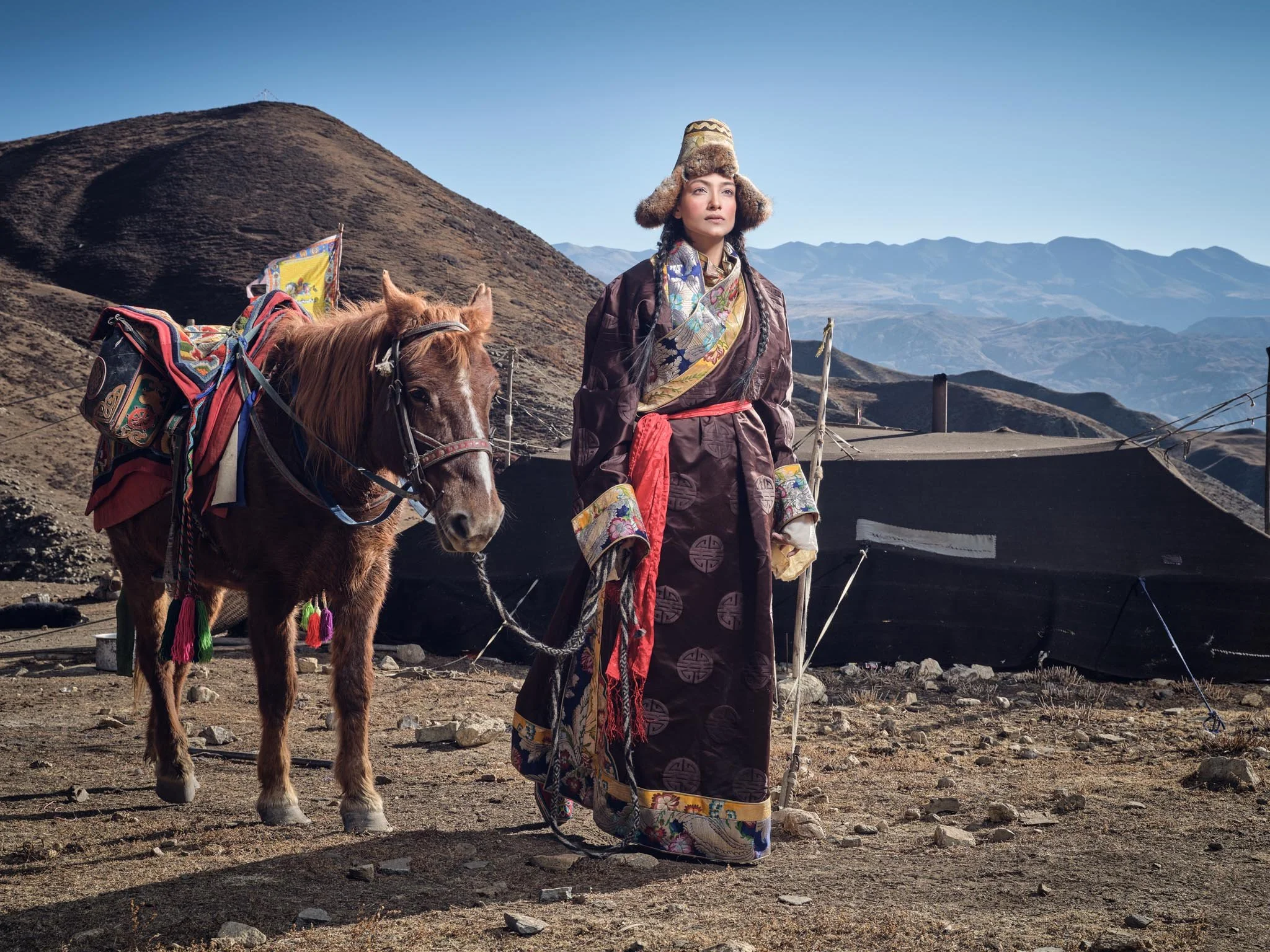
VISUAL STORYTELLING FOR IMPACT IN NEPAL
A Practical Learning Experience in Human Centred Photography, Ethical Storytelling and Visual Communication
VISUAL STORYTELLING FOR IMPACT
Seeing Beyond the Image
3 DAYS OR 7 DAYS · MINIMUM 10 PARTICIPANTS · NEPAL
A practical visual storytelling programme for organisations that work with people, communities, development, conservation, research, environment, education, public engagement and social impact.
US$750 PER PARTICIPANT · 3 DAYS
US$1,750 PER PARTICIPANT · 7 DAYS
WHY THIS PROGRAMME
Your organisation is already surrounded by stories.
People working in the field see them every day. A community meeting. A child learning something new. A farmer changing an old practice. A researcher collecting evidence. A health worker travelling to a remote village. A landscape changing around the people who depend on it.
The challenge is often not finding stories. It is recognising what is worth photographing, knowing how to approach it, and creating pictures that allow someone who was never there to understand what happened.
That is what we work on.
THIS IS NOT A CAMERA COURSE
A camera does not tell you what to photograph.
On a real assignment, you have to find the story, gain access, understand the people involved, work with the available light and make decisions while everything around you continues to happen.
That is very different from learning camera settings in a classroom.
We concentrate on the part that comes before the shutter and the decisions that follow it.
FROM FIELD EXPERIENCE
This programme comes from work, not theory.
For more than two decades, Gautam Dhimal and Location Nepal have worked around Nepal on international productions, documentaries, photography assignments, commercials, humanitarian and development stories, remote locations and complex field operations.
That experience brings a different kind of classroom.
We can talk about what actually happens when the location is difficult, the light changes, people become uncomfortable, access changes, a schedule slips or the photograph you planned is simply not there.
Then we work out what to do.
Location Nepal's current production work spans documentary, humanitarian, commercial, fashion, OTT and remote-location production, with Gautam Dhimal combining photography and visual storytelling with production and field logistics.
START WITH PEOPLE
The photograph usually gets better when the relationship gets better.
We look at how to approach people, when to photograph, when not to photograph, how to make someone comfortable and how to work without turning real lives into staged images.
For organisations working with communities, this matters as much as photographic technique.
PEOPLE, PLACE AND ACTION
A face tells one part of the story.
The room, the landscape, the tools, the hands, the people around them and what they are actually doing can tell the rest.
Participants work with portraits, environmental portraits, details, wider frames and sequences so that the photographs begin to describe a situation rather than simply illustrate a report.
WORKING WITH REAL LIGHT
Beautiful light is not always waiting for you.
Field work may mean harsh midday sun, a dark room, mixed colour temperatures, rain, dust, backlight or ten minutes of good light before everyone has to move.
We work with what is available and, where appropriate, introduce controlled light.
The objective is not to make every photograph look the same. It is to understand what the situation is giving you and make good decisions quickly.
ETHICS, CONSENT AND CONTEXT
Good storytelling begins before the photograph.
Who is being photographed? Why? Do they understand how the image may be used? Is the situation sensitive? Does the picture represent the person fairly? What happens when the photograph travels far beyond the community in which it was made?
These are practical questions, not academic footnotes.
For organisations working with children, vulnerable communities, indigenous groups, humanitarian situations or sensitive subjects, safeguarding and responsible representation become part of the photographic process itself.
LEARNING IN THE FIELD
The classroom eventually has to disappear.
We take participants outside, into real situations where they have to observe, approach, photograph, review and make decisions.
There is no perfect light. No controlled studio. No convenient pause button.
That is precisely why the field is such a good teacher.
FROM ONE PHOTOGRAPH TO A STORY
A strong photograph can open the door. A sequence can take someone inside.
Participants learn to think about establishing photographs, portraits, details, action, environment and the quieter frames that connect them.
The objective is not to collect as many photographs as possible.
It is to return with enough of the right photographs to tell the story properly.
PHOTOGRAPHY THAT HAS A JOB TO DO
Organisations need photographs for reasons.
An annual report needs something different from a campaign.
A donor presentation needs something different from Instagram.
A research publication needs something different from a newspaper feature.
A fundraising campaign may need an image that makes someone stop scrolling.
The photograph still has to be good. But it also has to work.
THE ECONOMICS BEHIND THE IMAGE
Someone usually has a reason for commissioning the work.
A development organisation may need to explain the results of a programme. A conservation group may need to communicate a threatened habitat. A company may need to show the people behind its sustainability work. A tourism organisation may need to change how a destination is perceived. A donor may need evidence of where money is going.
Understanding these needs changes how a photographer approaches an assignment.
It also changes the kinds of work they can begin looking for.
WHERE COULD THIS CAPABILITY LEAD?
The same photographic thinking can travel into many fields.
Development and humanitarian work. Editorial and journalism. Conservation. Research. Climate and environmental storytelling. Tourism. Education. Corporate sustainability. Public campaigns. Documentary. Commercial brand communication.
The subject may change completely.
The ability to see, access, photograph and communicate a story remains.
AND THEN THERE IS COMMERCIAL WORK
Human stories are not limited to NGOs.
A bank may need to show how its services affect communities.
An agricultural company may need to communicate farmers, production and sustainability.
A tourism campaign may need people rather than empty landscapes.
A healthcare organisation may need to explain the human side of its work.
A brand may need an authentic story about the people who use or make its products.
The commissioning organisation changes. The underlying visual skill does not.
WHAT CAN HAPPEN TO THE PHOTOGRAPHS?
Sometimes a photograph has a much longer life than expected.
A field assignment can produce images for a report today and a campaign tomorrow.
Some may become editorial photographs, magazine features, research illustrations, books, exhibitions, educational material or part of a long-term archive.
There are no guarantees. But understanding how images can travel helps photographers build work with greater purpose.
YOUR FUTURE CLIENTS
Learn to recognise who needs this work.
Development agencies.
NGOs and INGOs.
UN agencies.
Conservation organisations.
Research institutions.
Universities.
Museums.
Foundations.
Tourism organisations.
Editorial publications.
Corporate communications teams.
Advertising agencies.
Brands.
The programme does not promise commissions. It gives participants a better understanding of where their capability may have value.
FOR THE ORGANISATION
Train the people who are already closest to the stories.
Your programme officers, field staff, researchers, communications teams and project personnel often have access that an outside photographer never will.
Give them stronger visual skills and they can document their own work with greater confidence and purpose.
The benefit can continue long after the programme has finished.
DOCUMENT THE LEARNING
We photograph and film the programme as it happens.
Field visits. Practical assignments. Discussions. Group work. Presentations. Selected participant activities and the finished highlights.
The organisation receives a curated visual record of the experience that can be useful for internal reporting, staff engagement, newsletters, social media, presentations and future programme communication.
The training itself becomes part of the organisation's visual story.
GAUTAM DHIMAL
Photography, production and the realities behind the assignment.
Gautam Dhimal has spent more than two decades moving between photography, filmmaking, production and field work.
His experience includes human stories, documentary and environmental work, fashion and advertising, wildlife, aerial photography, remote productions and international projects. His work extends across fashion, advertising and nature and wildlife.
Projects such as Tharus, Brick by Brick, The Vanishing Himalayas, Until We Act and Wild Africa provide different entry points into the same question: how do you turn real people, places and changing environments into meaningful visual stories?
Participants learn from the work and from everything that had to happen to make the work possible.
LOCATION NEPAL
The production experience behind the learning.
Location Nepal has been supporting international film and photography productions in Nepal since the late 1990s, bringing together locations, permits, crews, logistics, equipment, local coordination and the practical realities of working across the country.
That infrastructure matters here because visual storytelling rarely happens in isolation.
Someone has to find the place.
Someone has to reach it.
Someone has to speak to the people.
Someone has to make the schedule work.
Someone has to solve the problem when it does not.
That is part of what participants get to understand.
OM PRAKASH YADAV
Photography educator, field photographer and conservation storyteller.
Om Prakash Yadav brings another important dimension to the programme: years of teaching photography and working with people who need to use photography in the field.
He is a Nikon School Nepal instructor and has delivered photography training and capacity building programmes for photographers, wildlife guides, conservation organisations and protected area staff. His work includes national wildlife guide training and capacity building for conservation and tourism professionals.
His teaching is rooted in practical field photography, observation, ethics and visual communication rather than camera settings alone.
MORE PEOPLE CAN JOIN THE ROOM
The programme does not have to stop with the core mentors.
Depending on the organisation, subject and objectives, Location Nepal can bring in additional specialists from conservation, research, journalism, filmmaking, development, community work, environmental science and related fields.
These may be locally based experts or, where a particular programme benefits from it, experienced international mentors and specialists from our wider professional network.
The right expertise, brought in when it can make the learning better.
REAL CASES. REAL ASSIGNMENTS.
We use the work we have actually done.
That can mean discussing a documentary assignment, a difficult location, a humanitarian story, a commercial production, a remote Himalayan shoot, an environmental project or a photograph that took much more planning than the final frame suggests.
The interesting part is often what happened before and after the picture.
FROM THE HIMALAYAS TO THE TERAI
Nepal itself becomes part of the classroom.
Depending on the programme objectives, field learning can move through very different environments.
Urban communities. Heritage areas. Rural settlements. Agricultural landscapes. Forests. Wetlands. Mountain environments.
The point is not simply to visit different places.
It is to understand how the visual approach changes when the people, environment and story change.
TAILORED TO THE GROUP
We start by asking what your people actually need.
What do they photograph now?
Where do they work?
What kinds of stories do they encounter?
What are they struggling to communicate?
What would make the training genuinely useful six months from now?
Those answers shape the programme.
PRACTICAL MATERIALS
Participants leave with things they can continue using.
Printed learning materials.
Dedicated field guides.
Programme resources.
Giveaways.
Practical references.
And, most importantly, exercises and approaches that can be taken back into their own work.
HEALTH, SAFETY AND FIELD PREPARATION
Field work is planned with the same care as a professional production.
For activities outside Kathmandu, Location Nepal plans the appropriate transport, field coordination, communications, first-aid provisions and emergency arrangements according to the location and activity.
Where required, arrangements can include paramedic or nursing support, standby ambulance, rescue coordination and evacuation planning.
The exact arrangements depend on the field location and programme design.
INSURANCE
We cover our operational side. Participants should cover theirs.
Location Nepal maintains appropriate insurance and operational arrangements for its own crew and responsibilities.
Participants and participating organisations are strongly recommended to arrange appropriate travel, medical, accident and personal insurance for everyone attending.
This is particularly important for programmes involving travel outside Kathmandu.
WHAT THE PROGRAMME INCLUDES
Designed as an all-inclusive field learning experience.
3-DAY PROGRAMME
Transportation, meals and applicable field logistics for programme activities and field visits in and around Kathmandu.
7-DAY PROGRAMME
Transportation, meals, accommodation and applicable field logistics throughout the programme, including field visits outside Kathmandu.
Depending on the curriculum and field objectives developed with our mentors and specialists, transportation may include air travel, surface transport or a combination of both. The appropriate arrangements are determined by the programme rather than offered as a fixed itinerary.
Both formats include programme preparation, tailored curriculum development, mentors and specialists, field visits, practical exercises, printed materials, dedicated field guides, documentation in photography and video, programme highlights and a Certificate of Participation.
GROUP SIZE
Start with ten. Build from there.
MINIMUM · 10 PARTICIPANTS
There is no published maximum.
Larger groups, multi department programmes and organisation wide initiatives can be discussed during planning. The field structure, mentors, logistics and practical sessions can be adjusted accordingly.
THREE DAYS
A concentrated introduction to visual storytelling in practice.
US$750 PER PARTICIPANT
MINIMUM 10 PARTICIPANTS
A focused programme for organisations that want their people to start seeing, photographing and communicating their work differently.
All programme transportation, meals and applicable field logistics within and around Kathmandu are included.
SEVEN DAYS
More time to practise. More time to review. More time for the learning to settle.
US$1,750 PER PARTICIPANT
MINIMUM 10 PARTICIPANTS
The longer format allows deeper field work, more tailored assignments, additional review and greater opportunity to connect the learning with the organisation's actual work.
Transportation, meals, accommodation and applicable field logistics are included throughout the programme, including field visits outside Kathmandu.
WHICH ONE?
It depends on what you want to change.
Three days works well when the objective is to introduce a stronger visual approach and give a team practical experience.
Seven days gives us considerably more room to work with specific organisational needs, field assignments and individual development.
We can discuss the right format before you book.
FOR LARGER OR LONGER INITIATIVES
The programme can become something bigger.
A single training can be the beginning of an internal visual capability.
It can develop into regional training, field documentation systems, communications capacity, campaign development or a longer-term organisational visual storytelling initiative.
For larger programmes, Location Nepal can develop the structure, faculty and field component around the organisation's objectives.
FREQUENTLY ASKED QUESTIONS
Who is this programme for?
It is designed primarily for organisations and groups working in development, humanitarian response, conservation, environment, research, education, social impact, public engagement and related fields. Corporate communications and sustainability teams can also benefit.
Do participants need to be photographers?
No. Participants can work with cameras or smartphones. The emphasis is on seeing, storytelling, ethics, communication and practical photographic decision-making.
Can we bring our own team?
Yes. The programme begins at 10 participants, with no published maximum.
Can it be customised?
Yes. The organisation's work, participants, field realities and communication objectives are considered during preparation.
Are field visits included?
Yes. Practical field learning is part of the programme and is planned according to the group's objectives.
Are meals included?
Yes. Meals required as part of the programme are included.
Is accommodation included?
For the 3-day programme, accommodation is not included. For the 7-day programme, accommodation required during the programme and field visits is included.
Is transportation included?
Yes. For the 3-day programme, transportation required for programme activities and field visits in and around Kathmandu is included.
For the 7-day programme, transportation throughout the programme and applicable field visits outside Kathmandu is included. Depending on the curriculum and field objectives, this may involve air travel, surface transport or a combination of both.
Is the programme all-inclusive?
Yes, within the agreed programme scope. The 3-day programme includes transportation, meals and applicable field logistics in and around Kathmandu. The 7-day programme additionally includes accommodation and applicable field logistics for field visits outside Kathmandu.
Is the programme documented?
Yes. Photography and video documentation of programme activities is included, together with a curated selection of highlights.
Who leads the programme?
Gautam Dhimal and Location Nepal lead the programme, with Om Prakash Yadav and other specialists brought in according to the subject, objectives and requirements of the group.
Can international experts be involved?
Yes. Location Nepal can draw on its wider local and international creative and professional network where additional expertise is relevant.
Is this only for NGOs?
No. The principles apply to humanitarian and development organisations, conservation and research groups, universities, public institutions, corporate sustainability teams, tourism organisations and other organisations communicating real-world stories.
Can the programme help with donor communication?
It can strengthen the organisation's ability to produce stronger visual material for reports, campaigns, presentations, fundraising and public communication. It does not guarantee funding or donor outcomes.
Can participants use the skills professionally?
Yes. The capability can be applied to documentary, editorial, journalism, conservation, research, development communication, corporate storytelling, commercial work and other photographic assignments.
Does the programme guarantee future commissions?
No. The programme provides experience, knowledge, practice and a clearer understanding of the professional ecosystem. Future opportunities depend on the participant's continued work, portfolio, relationships and market.
What insurance should participants have?
Participants and their organisations should arrange appropriate travel, medical, accident and personal insurance. Location Nepal maintains appropriate insurance for its own crew and operational responsibilities.
How are field safety arrangements handled?
Field activities are planned according to the location and activity, with appropriate transport, communications, first aid and emergency planning. Where necessary, additional medical, ambulance, rescue or evacuation arrangements can be incorporated.
YOUR ORGANISATION ALREADY HAS THE STORIES
We help your people recognise them.
Bring the people who are closest to the work.
Bring the stories they already know.
Bring the questions you are struggling to communicate.
We bring decades of photographic, production and field experience, along with the mentors and practical environment to work through them.