WHY FILMING IN NEPAL EXISTS
A production country deserves a production guide written by people who actually work here.
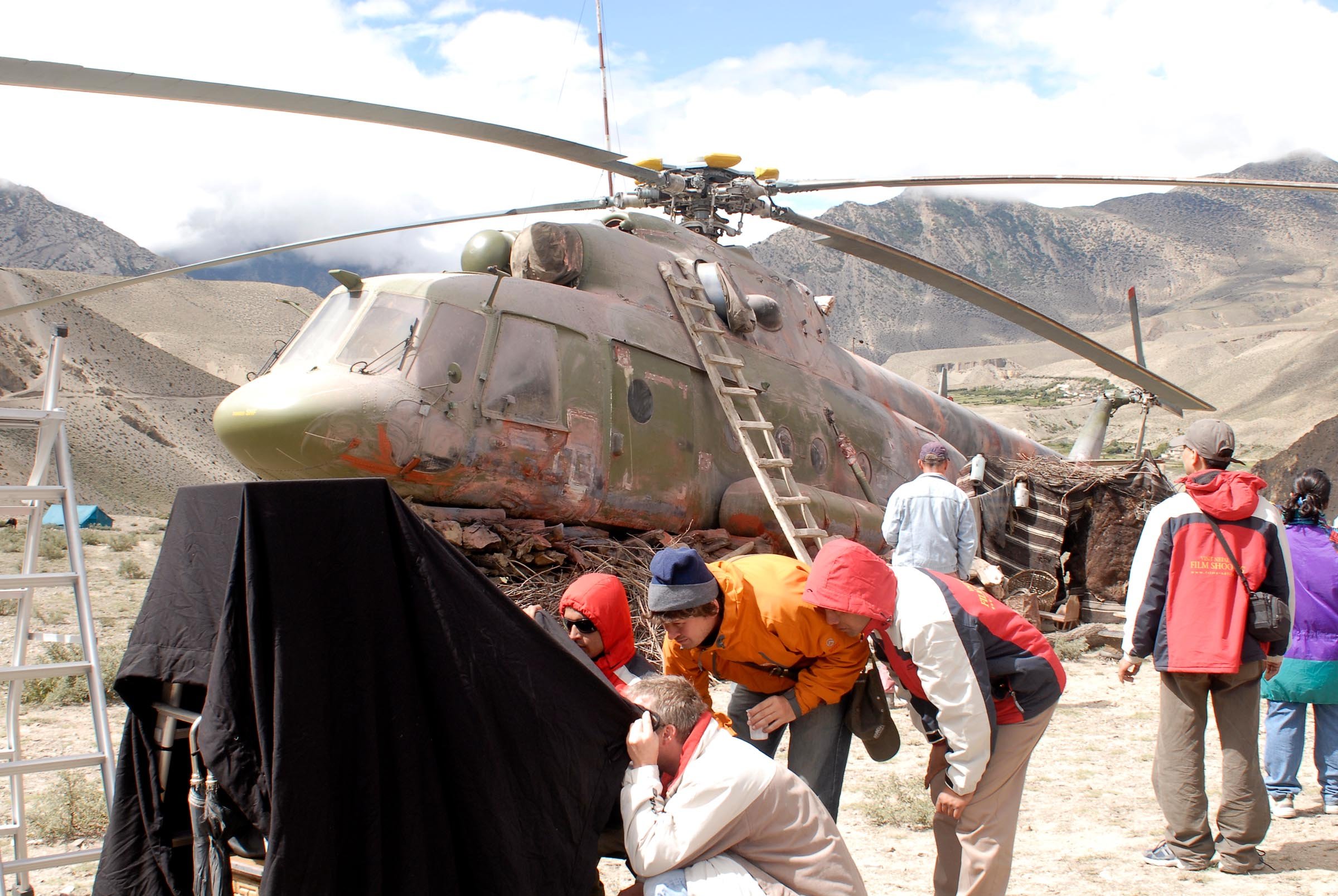
There is a particular kind of question that comes up whenever an international filmmaker, photographer, producer or creative team starts planning a project in Nepal: can we film there? Usually, the answer is yes. The more useful question is what comes next. Who handles the permits? Which authority needs to be involved? How much time should the production really allow? Can equipment be brought into the country temporarily? Which locations are genuinely practical for a crew, and which ones only look practical on a location deck? What happens when the road ends, the weather changes or a carefully planned schedule meets the realities of working in the Himalayas?
These are rarely the questions that appear in the beautiful opening presentation for a project. They are, however, the questions that can determine whether a production runs smoothly or spends its valuable shooting days solving problems that could have been anticipated months earlier. Nepal offers extraordinary possibilities for filmmakers and photographers, but making the most of those possibilities requires an understanding of the country that goes considerably deeper than knowing where the good views are.
Nepal Looks Different From The Production Desk
From outside Nepal, it is easy to see the country through its extraordinary locations. The Himalayas, ancient cities, forests, wildlife, rivers, villages and high altitude landscapes create an almost ridiculous collection of visual possibilities. A production can move from a historic city to a forest, from a busy urban environment to a remote mountain valley, sometimes within the same project.
The practical reality is rather more complicated. A mountain does not care about your call sheet. A road does not become shorter because the client is flying home tomorrow. Weather does not consult the shooting schedule. A location that looks two hours away on a map may take considerably longer once a vehicle, equipment and an entire crew have to reach it. A permit that appears straightforward can involve several authorities, different requirements and careful coordination around dates, locations and activities.
After years of working on productions across Nepal, we have seen repeatedly that the difference between a beautiful idea and a workable production is usually found in the details nobody sees in the final frame. The image may last a few seconds on screen, or occupy a page in a magazine, but behind it can be weeks of planning, conversations, permissions, scouting, transport, equipment decisions, crew coordination and contingency planning.
That experience is the reason this publication exists.
Learning The Work By Doing The Work
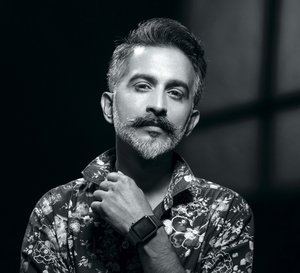
Gautam Dhimal's career has moved through photography, film production, line production, fixing, location work and visual storytelling, with projects ranging from international television and feature productions to commercial campaigns, fashion, documentary and demanding photographic assignments. Much of that experience has been built in the field, where the neat assumptions made during planning eventually meet roads, weather, people, equipment and locations as they actually are.
Some productions have involved large international teams and complicated logistics. Others have required small crews to work in remote environments where there is very little room for error. A project such as Black Narcissus required remote Himalayan environments to function as production environments, with crews, equipment, structures, transport and safety considerations all having to work together. A completely different kind of challenge came with the Nippon Paint campaign, where more than 200 crew members from Nepal, Malaysia and India, together with hundreds of extras and extensive equipment, came together at two UNESCO World Heritage locations for a single shooting day.
The projects may have looked completely different from one another, but the underlying lesson was remarkably consistent. Production is never a collection of separate tasks. Location affects schedule. Schedule affects light. Light affects the creative plan. The creative plan affects equipment. Equipment affects transport. Transport affects crew movement. Permissions affect almost everything. Change one part of the plan and several other parts may have to move with it.
That is the kind of knowledge that tends to accumulate slowly. When Gautam began learning photography and film production, there was no neatly organised library explaining how everything worked in Nepal. Much of the learning happened by doing the job, making mistakes, working out why something had gone wrong and trying to do it better the next time.
It is a perfectly effective way to learn, but it can be an expensive one.
Over time, those lessons become instinct. You learn which questions need to be asked before a location scout. You learn that something being technically possible does not necessarily make it a sensible production decision. You learn to look at a road differently when you are responsible for moving a camera package along it. You learn why a good fixer is much more than somebody with a list of telephone numbers. Most importantly, you learn that knowing when to change the plan can be just as valuable as knowing how to execute it.
That knowledge should not have to remain locked inside the heads of people who have spent years acquiring it.
Building A Practical Knowledge Library
Filming In Nepal is intended to become a working knowledge library for people who actually need to make something here. It is not a tourism guide dressed up as a production manual, and it is not a collection of generic articles created simply to fill a website. The purpose is to explain what is involved in bringing a production to Nepal, using practical experience, reliable information and lessons from projects that have actually taken place on the ground.
The subjects will range from film permits and government coordination to location scouting, crew, equipment, customs, transport, accommodation, drones, high altitude filming and remote production. There will be information for feature films and television, but also for documentaries, advertising, fashion, photography, journalism and smaller independent productions. Some articles will explain a process from beginning to end. Others will look closely at a particular production problem or location. Some will come directly from field experience, while others will bring together official information and explain what those rules mean when you have an international crew waiting to work.
There will also be mistakes, because pretending that every production goes perfectly would be rather less useful. Some of the best lessons come from the things that did not go according to plan. Where information changes or depends on a particular authority, location or type of production, that will be made clear. When something is uncertain, we would rather say so than manufacture an impressive sounding answer.
This approach is also connected to a broader belief that practical knowledge becomes more valuable when it is shared. That has increasingly shaped Gautam's work beyond production itself, through mentoring, workshops, professional photography experiences and a wider creative network supporting filmmakers, photographers, actors, models, producers and other creative professionals. Behind The Frame provides a more personal window into those experiences, while the professional programmes offered through Location Nepal turn some of that knowledge into practical learning.
Nepal Is Changing, And Production Is Changing With It
Nepal is no longer simply a distant location that international crews occasionally discover. The country is increasingly part of conversations around film, television, advertising, photography, documentary, adventure, conservation and international storytelling, and the range of productions taking place here continues to grow.
That creates an interesting opportunity for both sides. International producers need reliable local knowledge, while Nepali filmmakers, photographers, technicians and other creative professionals are looking for opportunities to work with larger productions and understand how the international production world operates. There are also plenty of people somewhere between those two groups, trying to work out how to connect with one another.
Filming In Nepal is an attempt to make that connection a little easier by putting useful information in one place and documenting the knowledge that comes from actually doing the work. The intention is not to tell producers that everything in Nepal is easy. It is to help them understand what is involved, prepare properly and make better decisions before they arrive.
Nepal has extraordinary locations, remarkable visual diversity and enormous potential for productions of many different kinds. It also has its own systems, geography, weather, infrastructure and ways of working. Understanding both sides of that equation is what makes the difference between simply finding a location and successfully producing there.
This is where we begin.
There will be guides, production stories, location intelligence, practical advice and lessons from the field. Some will answer questions that producers have been asking for years. Others will answer questions they did not yet know they needed to ask.
Because the most useful production knowledge is rarely the information that looks impressive on a location brochure. It is the information that saves a day, prevents a mistake, solves a problem or helps a crew make the right decision when things do not go exactly according to plan.
And in Nepal, as anywhere else, they eventually will.