LOCATION SCOUTING IN NEPAL: MORE THAN FINDING A BEAUTIFUL PLACE
The right location has to work for the camera, the story and everyone who has to get there.
Nepal has a slight advantage when it comes to location scouting. There are beautiful places everywhere.
The problem is that beautiful places have a habit of making people say yes rather too quickly.
Show a director a photograph of a mountain village, an old monastery, a Himalayan valley or a road disappearing into Mustang and the conversation can be over in seconds. “That is it. That is the place.” It is an understandable reaction. Nepal can make a location scout look like the easiest job in the world.
Then somebody asks where the trucks are going to park. That is usually when the real conversation begins.
A location is not simply a picture. It is where a production has to exist for a period of time. People have to arrive, equipment has to move, actors have to work, cameras have to be positioned, food has to appear, permissions have to be in place and somebody eventually has to get everyone home again. The photograph may be spectacular, but the location has to survive contact with reality.
After decades of working in photography, film production and location work in Nepal, this is one of the things experience teaches you to notice. You stop looking only at what is inside the frame and start looking at everything around it.
THE LOCATION IS PART OF THE SCRIPT
There is a tendency to think of location scouting as a creative exercise that happens before the real production begins. In practice, the location is already influencing the production long before the first camera arrives.
A director may be looking for a particular mood. A cinematographer is thinking about light and movement. A photographer may be imagining the frame. A producer is quietly wondering how many vehicles can get there, where the crew will sleep and whether the equipment can actually reach the shooting position.
All of them are looking at the same place. They are simply seeing different productions.
This is why professional location scouting in Nepal involves much more than finding attractive photographs. Light, season, road access, vehicle movement, accommodation, communications, power, weather, permissions, local communities and crew welfare can all determine whether a location is genuinely usable.
And Nepal makes this particularly interesting because the visual range is extraordinary within a relatively compact country. A photographer can work in historic cities, forests, agricultural landscapes, wildlife habitats, mountain communities and high Himalayan environments. The challenge is not finding something visually interesting. The challenge is knowing which place will give the production what it actually needs, and what it will take to make that place work.
That knowledge is rarely found in a Google image search.
SOMETIMES THE LOCATION IS THE PRODUCTION
Consider the Panasonic VIERA commercial filmed around Thini in the Jomsom region, with Nilgiri Himalaya providing the backdrop. On paper, it sounds wonderfully simple. Put a very large television in a beautiful Himalayan village and film it.
Except the television was 108 inches. There was no road to the exact location.
The production therefore had to solve a problem that had nothing to do with the beauty of the location and everything to do with getting a very large hero prop to the set. A chartered aircraft was used to get the television to Jomsom, followed by the local movement required to bring it into the production environment. Location scouting, logistics, permits, equipment, crew and production planning were therefore part of one decision rather than separate departments.
That is the part of location work that photographs rarely show. A location can be perfect until you discover what needs to be carried into it.
The same principle appeared on Black Narcissus, the Disney, FX and BBC One production filmed in Nepal. The Himalayan environment was central to the story, but the locations also had to function as working environments for an international television production. Scouting was tied directly to permits, crew, equipment and logistics, and the production ultimately required the creation of working environments in remote Himalayan terrain.
The mountains were never the difficult part to photograph. Making a television production function there was. That distinction is important.
THE BEST LOCATION MAY NOT BE THE ONE YOU FIRST FIND
One of the most useful things a good scout can do is challenge the first answer. There is nothing wrong with falling in love with a location. It happens to everyone. The danger is falling in love with it before asking whether it actually works.
A slightly less dramatic valley may have better light, better access and better accommodation. A village that looks perfect from one angle may be impossible for a large crew. A location that seems remote may turn out to have surprisingly good local support. Another that looks wonderfully close on a map may consume half the shooting day getting everyone there.
The answer is therefore not always the most spectacular place. Sometimes it is the place that gives the director ninety percent of the visual idea while removing half the production headache. That is not compromising the creative vision. It is understanding it.
The work carried out by Location Nepal across films, television, commercials and photography is full of examples where the location itself became part of the production equation. The projects range from Himalayan television productions and feature films to commercials in heritage cities, remote landscapes and high altitude environments.
Powerade is perhaps an especially good reminder of how quickly the word “location” can become misleading.
The production went to a remote Mustang plateau in winter. More than 550 people were accommodated on site. Hundreds of extras travelled for days to reach the shoot, medical support was required, helicopters were kept ready for emergencies and almost one hundred people spent eleven days creating a football ground where there was no conventional road access.
At that point, calling Mustang a “location” feels almost inadequate. It was an entire temporary production ecosystem.
YOU START SEEING THE THINGS THAT ARE NOT IN THE PHOTOGRAPH
There is a moment in a production career when scouting changes. You stop asking only, “Is this beautiful?” You start asking, “Where does the sun go at four o'clock?”
Then you notice the road. The unloading point. The distance from the vehicle to the camera. The nearest accommodation. The space behind the building. The possibility of rain. The direction of the wind. The condition of the road after rain. The availability of power. The nearest medical support. The local community. The possibility of noise. The amount of time the crew will spend moving rather than shooting.
And, sooner or later, somebody asks about the toilet. That question has probably ended more beautiful location conversations than anybody will admit.
This is also why field experience matters so much. Location Nepal's photography programmes are built around the idea that knowing Nepal is not simply knowing where something exists. It is knowing how to reach it, when to go, who to work with and what becomes possible when the obvious location is not the right location. The same principle applies to a commercial or feature film, only with considerably more people and considerably more expensive equipment.
The country itself becomes part of the knowledge.
The more remote the location, the more this matters. In high altitude environments, weather, altitude, transport, accommodation, communications and safety are not footnotes. They can determine the shooting schedule itself. Gautam's own field writing has repeatedly returned to this reality, from working in snow and high altitude regions to productions where preparedness, medical support and aviation can become part of the creative operation.
EXPERIENCE IS REALLY THE ABILITY TO SEE AHEAD
This is perhaps the least glamorous part of location scouting and the most valuable. Experience does not mean knowing every location in Nepal. Nobody can. It means knowing what questions to ask when you encounter a new one.
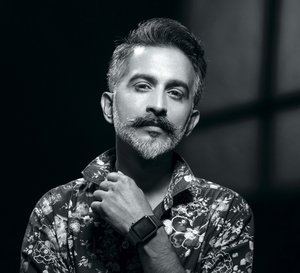
Gautam Dhimal's work has moved between photography, filmmaking, line production, aerial work, documentary projects and international productions. His own account of photography describes a career in which the image has always been accompanied by planning, travel, permits, crews, changing conditions and the occasional need to improvise when reality decides it has other plans.
That way of thinking also explains why location scouting cannot be separated entirely from production.
A scout who understands only the picture may find a beautiful place. A scout who understands production can tell you what that beautiful place is going to cost in time, people, equipment, access and risk. And a scout who understands both can sometimes find something better than the client originally asked for.
That is the sweet spot.
It is also why location knowledge is not something that can simply be downloaded into a database. Maps are useful. Satellite imagery is useful. Online photographs are useful. Artificial intelligence will increasingly make all of those things easier to search. None of them can tell you with certainty what it feels like to arrive somewhere with a crew, equipment and a schedule that has already started ticking.
The map tells you where the road is. Experience tells you whether you should trust it.
NEPAL IS NOT A BACKDROP
There is a larger reason why location scouting matters so much here.
Nepal is often marketed as a collection of spectacular landscapes. That is true, but it sells the country rather short. Nepal is also a network of communities, cultures, roads, mountains, forests, heritage sites, working farms, airports, trekking routes, local specialists, guides, drivers, technicians and people who know how things actually work when the plan changes.
That is the real production landscape.
It is why a serious scout spends time talking to people, not just photographing places. The right location may depend on a local contact. The right route may be known by a driver who has travelled it for twenty years. The right shooting window may be understood by someone who lives there. The best solution to a problem may come from a person who will never appear in the final credits.
This is also the thinking behind Location Nepal's wider field and learning work. Whether the activity is a university field programme, a photography expedition or an international film production, the principle is remarkably similar: the value of being in Nepal comes from understanding the place rather than simply passing through it.
A beautiful location is easy to photograph. A working location is something else entirely.
The best location scouting does not simply give a production a list of places. It gives the director, photographer and producer a clearer picture of what is possible, what is difficult, what needs to happen first and where the surprises are likely to come from.
The objective is not to remove all the uncertainty. That would be impossible, particularly in Nepal. The objective is to discover as much of it as possible before the first shooting day. Because the right location is not necessarily the highest mountain, the oldest temple or the most dramatic valley. It is the place where the story can happen, the camera can work, the people can function and the production can survive.
And sometimes, after all the scouting, planning, arguing, driving, climbing and wondering whether the road really does continue another three kilometres, you arrive somewhere and realise the original idea was right after all.
That is a pretty good day on location.