NEWS AND MEDIA FIXING IN NEPAL
What international journalists and media crews need from a local fixer when the story cannot wait.
News has a very different relationship with time.
A commercial production might spend weeks preparing for a shoot. A feature film can spend months planning locations, crew, equipment and logistics. A news story can begin over breakfast and require a journalist, a vehicle and a workable plan before lunch.
Then the plan changes.
The interview moves. A source becomes unavailable. The weather turns. A road is blocked. Someone mentions another person who should be interviewed, but they happen to live several hours away. The story suddenly becomes bigger than expected. The editor wants something different. A flight is cancelled.
This is where news and media fixing becomes much more than arranging a car and translating a few conversations.
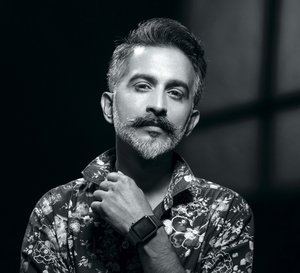
Gautam Dhimal has spent decades working across film, television, documentary, commercial and photographic productions in Nepal, moving between creative and production roles depending on what a project requires. That experience matters in news fixing because the job often sits somewhere between journalism and production. You need to understand the story, but you also need to understand locations, people, equipment, transport, permissions and what can realistically happen in a day. His experience as a line producer and fixer in Nepal brings that wider production perspective to the field.
Gautam leads a network of experienced Nepali fixers and field production professionals working with international journalists, broadcasters, television networks, documentary teams, newspapers, magazines and digital media organisations. An assignment might need nothing more than one experienced fixer and a vehicle. It might also require a field reporter, camera person, photographer, producer, translator, researcher, sound recordist and a complete logistics operation.
The important part is knowing what the story actually requires, finding the right people and making it all work quickly.
A NEWS FIXER IS PART OF THE REPORTING OPERATION
The word fixer can make the job sound deceptively simple. Find a location. Arrange an interview. Translate. Get a vehicle. Make a few telephone calls.
Those are certainly part of it. But anyone who has spent serious time fixing for international media knows that the real job begins long before the journalist arrives and often continues long after the first interview has been recorded.
There may be contacts to identify, appointments to arrange, locations to check, routes to understand, vehicles to organise and accommodation to secure. Domestic flights may need to be considered. Translators, researchers, camera operators or photographers may need to be brought into the operation.
Then the journalist arrives. And that is usually when the neat plan meets Nepal.
A conversation can reveal another story. An interviewee can suggest a location nobody had considered. A road that looked perfectly reasonable on a map can take considerably longer than expected. A journalist may decide that the story is somewhere completely different from where everyone thought it was.
The fixer needs to understand the reporting objective well enough to respond. That requires local knowledge, but it also requires production knowledge.
The wider News and Media Fixing in Nepal service is built around that reality, with the ability to scale the local operation according to what the assignment actually needs.
THE NETWORK IS THE INFRASTRUCTURE
In Nepal, relationships are often as important as maps. A journalist may need to reach a government official, local authority, community leader, researcher, conservationist, business owner, hotel, pilot, helicopter operator or someone who simply knows what is happening in a particular place.
Finding a telephone number is not the same as knowing who to call. And knowing who to call is not always the same as knowing how to approach them.
Years of production work build a network of people across government, local communities, transport, aviation, hospitality, conservation, photography, film production and journalism. Some relationships come from working on major international productions. Others come from years of returning to the same places and working with the same communities. Many are simply built through doing the job properly and being reliable.
That becomes particularly valuable when a story is moving quickly.
A fixer might know that a particular route is technically open but practically difficult. Someone else may know which local authority needs to be contacted. A photographer may be available in Kathmandu but already working outside the valley. A camera operator may be excellent for a television news report but not the right person for a documentary requiring several days in the field.
The network is valuable because the fixer knows how to use it.
That same production intelligence sits behind a larger line production and field production operation, where crew, transport, equipment, locations and logistics have to work together rather than becoming a series of disconnected problems.
News fixing draws on the same foundation, but the clock is usually moving much faster.
FROM ONE JOURNALIST TO A COMPLETE FIELD TEAM
Not every assignment needs a large crew. Sometimes the best arrangement is a correspondent, an experienced fixer and a reliable vehicle. Increasingly, journalists arrive with remarkably capable equipment of their own. An iPhone, compact camera and laptop can now produce material that would once have required a considerable amount of equipment and infrastructure.
But there are stories where the requirements are very different.
A television report may need a camera operator, sound recordist and field producer. A documentary team may need additional camera support, lighting, sound, data management, production assistance and location coordination. A magazine assignment may require both still photography and video. A broadcaster may need someone who understands not only the story but also the technical requirements for getting the material back to the newsroom.
The local operation can be built around any of these needs.
There might be a reporter and camera person one day, followed by a photographer and researcher the next. One vehicle might become two. A straightforward Kathmandu assignment might suddenly require accommodation outside the capital, domestic flights or a helicopter operation into a remote area.
This is where the wider experience of a production team becomes useful.
Nepal can compress several very different production environments into one assignment. A crew can begin in Kathmandu, move through busy urban areas, travel along rural roads and eventually find itself working in an environment where altitude, weather and access become serious considerations.
Helicopter work introduces another layer. Aircraft availability, weather, landing conditions, permissions, passenger numbers, equipment and operational limitations all become part of the planning.
The answer is not always simply yes or no. Very often, the answer is: here are the options.
That is one of the most useful things an experienced fixer can bring to a journalist. Not just an answer, but alternatives.
THE PLAN WILL CHANGE. THE QUESTION IS HOW WELL YOU HANDLE IT
Anyone who has worked in Nepal for long enough develops a healthy respect for the word backup.
There should be another vehicle. Another interview option. Another route. Another location. Another camera operator if the first person becomes unavailable. Another plan if the weather decides it has better ideas. Sometimes there needs to be a backup to the backup.
This is not pessimism. It is production.
The best fixers are constantly looking ahead at the points where an assignment could slow down. That does not mean turning every story into a complicated operation. Good preparation often has the opposite effect. It allows the final operation to look remarkably simple because the difficult decisions have already been made.
Years of working on international productions teach you to notice the small things before they become large things. A road condition that looks manageable from Kathmandu can have very different implications once equipment and crew are involved. A domestic flight can affect an entire day's reporting schedule. A government appointment may require more flexibility than an international newsroom timetable normally allows.
These realities are part of what has shaped Location Nepal's production work, from large international crews and heritage locations to remote Himalayan environments, demanding logistics and complicated location requirements.
The same mindset is valuable in news. The difference is that there is usually much less time to explain why something has gone wrong.
THE RULES KEEP MOVING
Government procedures, permissions and regulations in Nepal are not something a journalist should assume will remain exactly as they were on the previous assignment.
Different locations and subjects can involve different authorities. Heritage sites, conservation areas, protected regions, religious sites, border areas and drone operations can each introduce additional considerations. Requirements can also change, meaning that information that was correct for a previous production may not necessarily be correct today.
For foreign productions, the Film Development Board's current guidance requires coordination through a local coordinator and documentation covering areas such as the production, foreign crew, itinerary and equipment, with additional consent depending on the location or nature of the work.
For news organisations, the practical lesson is simple: check the current position before assuming that yesterday's procedure still applies.
A fixer should not simply know the rules from memory. The fixer should know where to verify them, which authority is relevant and how the process might affect the reporting schedule.
That becomes particularly important when a journalist is working on a developing story.
WHEN REPORTING BECOMES A PRODUCTION
A correspondent may begin with one interview and discover an entirely different story. A television crew may arrive expecting a short report and realise they need considerably more material. A documentary producer may discover that the most important character lives several hours from the original location. A magazine assignment may suddenly require still photography, video and additional interviews.
Breaking news can change even faster.
This is where the distinction between fixing and production support becomes useful. The journalist remains focused on the story. The local team works around the journalist to make the reporting possible.
That might mean arranging a vehicle, finding an interview location, checking access, organising a translator or researcher, booking accommodation, arranging domestic travel, finding a camera person, bringing in a photographer, coordinating a helicopter or simply finding somewhere quiet to record a piece to camera.
Sometimes it means doing all of those things in the same day.
The purpose is not to become part of the story. The purpose is to help the journalist tell it.
THE STORY COMES FIRST
The best fixing is often invisible. The journalist gets the interview. The camera gets where it needs to be. The material is recorded. The story is filed. The audience sees the reporting rather than the machinery that made it possible.
That requires discretion, speed, cultural awareness, technical understanding and a strong sense of where the journalist's responsibility ends and the fixer's responsibility begins.
It also requires knowing when not to interfere.
Gautam's experience in this field is not limited to arranging access for visiting crews. He has also worked directly on assignments where reporting, production and photography have had to come together under difficult circumstances. Following the 2015 earthquake in Nepal, for example, he produced and photographed Dealing With Disasters, an experience that remains relevant to the way difficult field assignments are approached.
For an international journalist arriving in Nepal, the support might be one experienced fixer and a vehicle. For a broadcaster, it might be a complete field team. For a documentary, it might begin with research and access and eventually become a much larger production operation.
What matters is the ability to build the right team quickly, understand the realities of working in Nepal and keep the assignment moving when the original plan inevitably changes.
Because when the story cannot wait, experience is not a luxury but is part of the infrastructure.