PORTRAITS OF NEPAL
10 Day Human Storytelling & Portrait Photography Learning Experience in Nepal
PORTRAITS OF NEPAL
Human Storytelling & Portrait Photography Learning Experience in Nepal
10 DAYS · 6–10 PARTICIPANTS
USD 6,750 PER PARTICIPANT
LEARN IT HERE.
USE IT ANYWHERE.
Nepal is the setting. Your photographic capability is the takeaway.
This is not simply about making portraits in Nepal. You will learn how to approach people, understand environments, build scenes, work with light, collaborate with local knowledge and create human centred images under real production conditions.
The skill travels long after you leave Nepal.

NOT A PORTRAIT TOUR
Real people. Real places. Real stories. Professionally produced.
You will not arrive at a village hoping someone happens to be standing in beautiful light.
You are learning how to create the conditions for meaningful photographs to happen, wherever your next assignment takes you.
We build the conditions that allow meaningful photographs to happen.
Real homes. Real workplaces. Real clothing. Real tools. Real animals. Real activities. Real people.
The difference is that the production is there to make the photograph possible.
REAL VILLAGES. REAL PEOPLE. REAL COMMUNITIES.
A living environment becomes your photographic set.
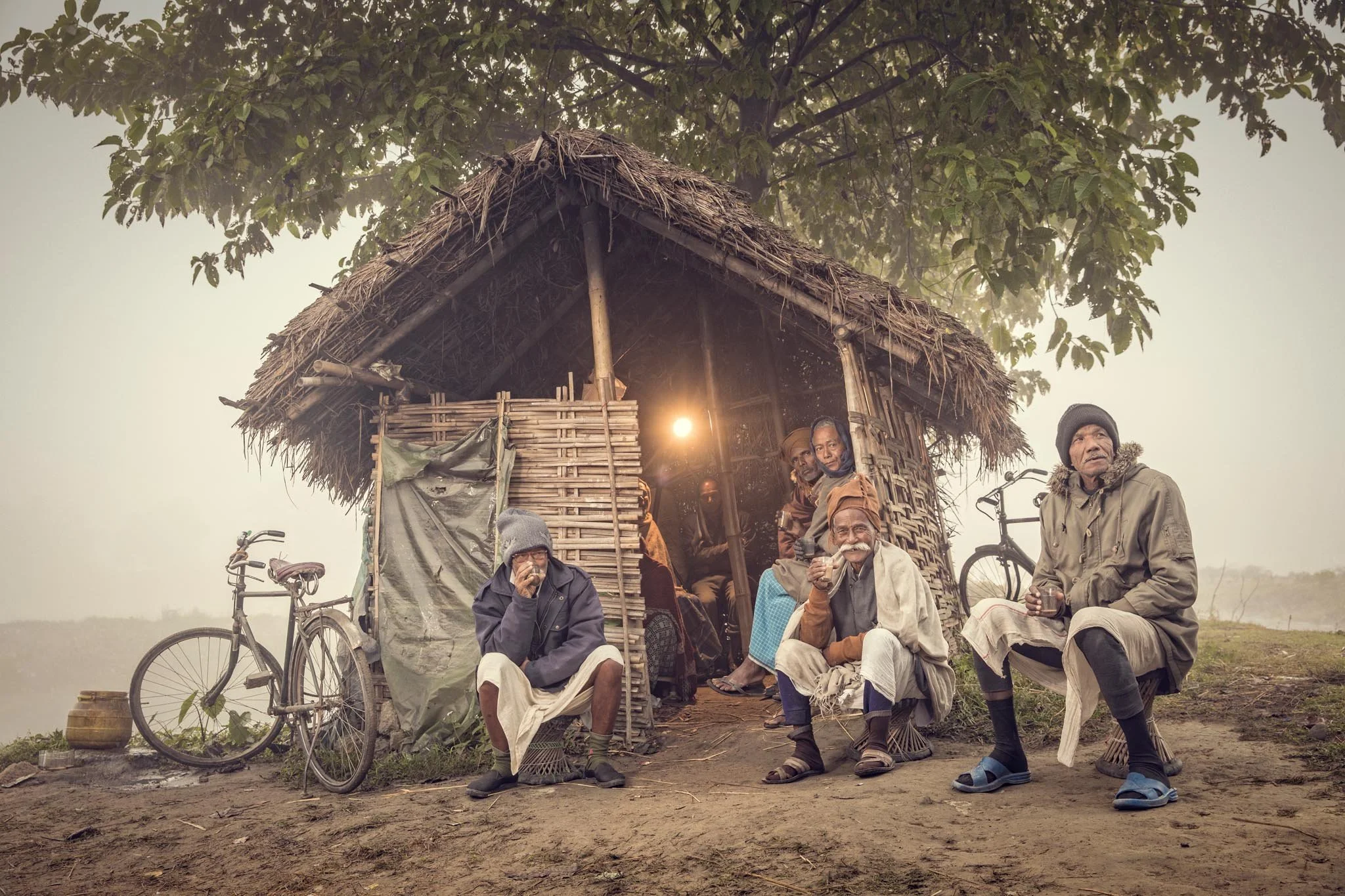
Imagine arriving while a traditional activity is actually happening.
The person you imagined is there. The tools are there. The animals are there. The environment is alive. The light is changing.
You are not asking people to stop their lives and pose. Or you might.
You are entering a carefully prepared environment where real life remains real, while production makes it photographable.
WHEN REAL LIFE MEETS PRODUCTION
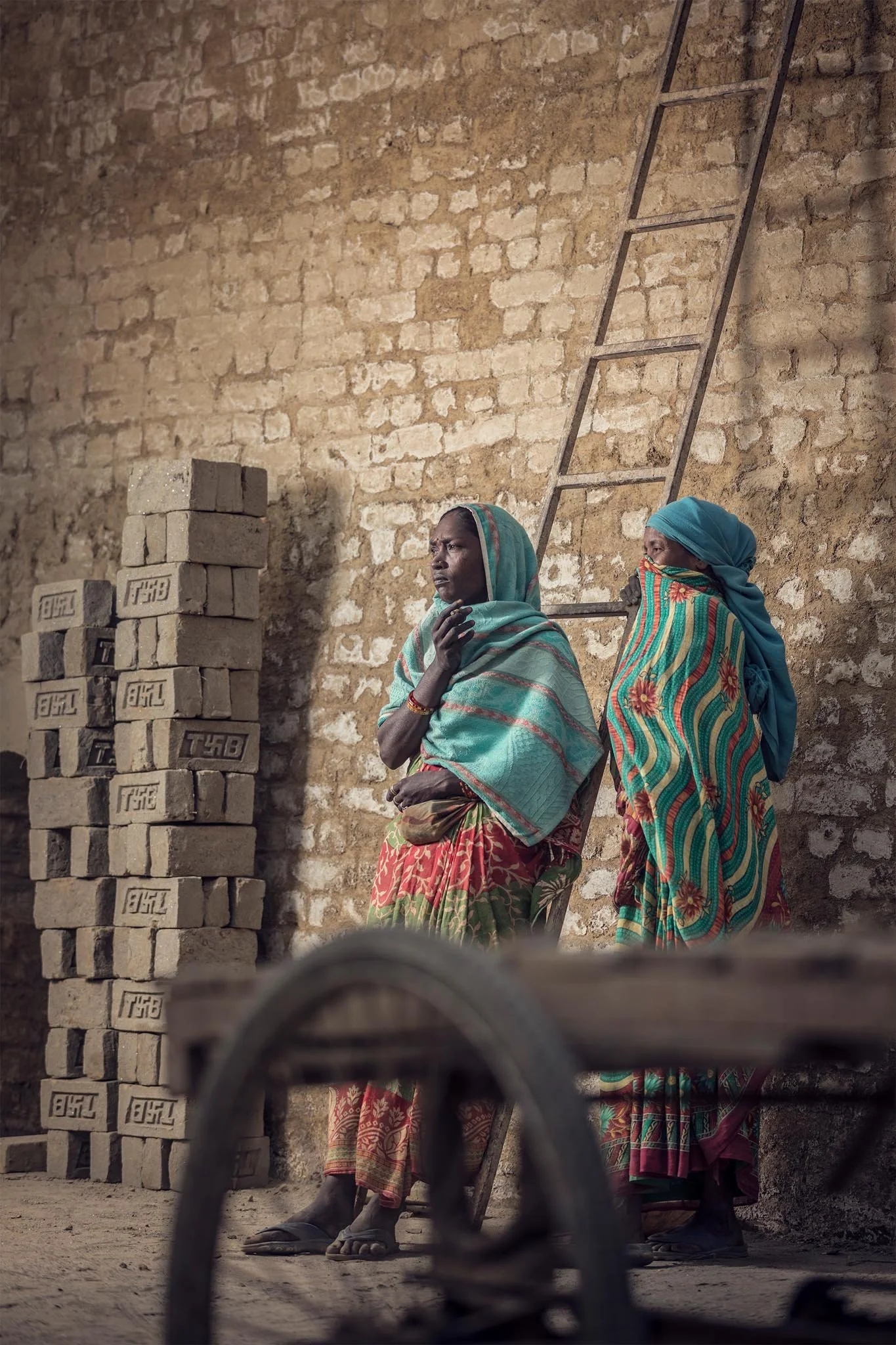
Sometimes the photograph needs a little help finding the moment.
A farmer may finish before the light is right. A grandmother may be somewhere else. The person carrying the story may be working when you arrive.
This is where production knowledge matters.
Local coordinators, community relationships, logistics and careful planning bring the right people, places, objects and activities together.
We do not manufacture reality. We make room for it to happen in front of your camera.
LEARN TO CREATE HUMAN STORIES
The skill goes far beyond portrait photography.
A strong human image can tell a story about a person, a place, a product, a service, a community or an entire idea.
You will explore how people connect with environments, objects, activities and each other, and how those relationships can become powerful visual stories.
Learn to create images that make people care.
YOUR MENTOR
Decades of field experience, brought into the classroom.
Gautam Dhimal brings decades of experience working with international photographers, filmmakers, journalists, advertising teams, brands, organisations and creative productions throughout Nepal.
He has seen what happens when creative intention meets real people, real locations, changing conditions and serious production requirements.
The lesson is not simply how to photograph a person. It is how to create the conditions for a photograph worth remembering.
WHO THIS IS FOR
For photographers who want people to become stories.
This programme is designed for photographers who already understand their cameras and want to develop stronger portrait, documentary and visual storytelling skills.
It is especially relevant to photographers interested in editorial, travel, journalism, advertising, social impact, humanitarian work, cultural heritage, environmental stories and human centred commercial photography.
You do not need to know exactly where your photography is going. You need to be ready to discover where it could go.
THE ART OF APPROACH
The photograph begins before you lift the camera.
How do you approach someone? When do you ask permission? When do you wait? When do you talk? When do you stop talking?
You will explore observation, communication, trust, cultural sensitivity, direction and the difference between photographing someone and photographing with someone.
A portrait is a relationship before it is an image.
NATURAL LIGHT. CONTROLLED LIGHT. YOUR DECISION.
Learn when to leave the light alone and when to shape it.
Work with available light. Find the window. Follow the sun. Wait for the right moment.
Then change the equation.
Use flash. Add a strobe. Introduce a modifier. Balance ambient and artificial light.
The goal is not to control everything. It is to know what deserves control.
FROM OBSERVATION TO DIRECTION
Sometimes you find the photograph. Sometimes you build it.
You may photograph an activity exactly as it unfolds.
You may notice something unexpected and follow it.
Or you may realise that the story becomes stronger if the person moves, an object changes position or the activity happens somewhere else.
You will learn to make that decision.
Observe. Direct. Adapt. Photograph.
THE LOCAL EYE
What you cannot see, someone local already knows.
A local coordinator can know who works where, when an activity happens, which family has the right connection, which path opens into the strongest setting and which cultural detail you might otherwise completely miss.
That knowledge changes everything.
Local knowledge is part of the creative process.
THE SET IS REAL
Nothing needs to look artificial because nothing is artificial.
Traditional homes. Workshops. Farms. Kitchens. Courtyards. Roads. Working environments.
Tools, clothing, furniture, animals and everyday objects remain part of the world you are photographing.
The environment is not a backdrop. It is part of the story.
PEOPLE ARE NOT PROPS
Respect is part of the production.
Our local team works with communities, participants and subjects before photography begins.
Appropriate permissions, releases, location arrangements and local payments are handled as part of the production.
Community contributions and donations are included where appropriate.
The people who make the photograph possible deserve to be treated as people first.
BUILDING THE SCENE
Sometimes the strongest documentary image needs a little direction.
A scene may already exist.
Sometimes we move one element. Sometimes we bring an activity together. Sometimes we place the right person in the right environment at the right time.
The photograph remains believable because the world around it remains true.
Real life. Carefully produced.
FROM HUMAN STORIES TO COMMERCIAL STORIES
The same skills can take you far beyond documentary photography.
A person using a service. A farmer producing something valuable. A family travelling somewhere. A worker behind a business. A customer choosing a product. A community connected by an idea.
Human connection sits at the centre of countless campaigns, publications and visual stories.
Learn to recognise that connection, build the scene and photograph it with intention.
The subject changes. The photographic thinking stays with you.
WHERE THIS CAN TAKE YOU
One experience. Many possible assignments.
The skills you develop here can lead into editorial and travel photography, advertising and commercial campaigns, humanitarian and social impact work, cultural heritage, environmental storytelling, tourism, corporate communication and commissioned portraiture.
You may photograph a person today.
Tomorrow, that same understanding of people, environment, direction and visual storytelling could help you photograph a brand, service, campaign or story.
You are not learning one type of photography.
You are expanding what you can be hired to create.
THE METHOD IS THE TAKEAWAY
Learn something you can use anywhere.
Nepal is the setting.
The real value is learning how to approach people, build trust, understand context, find visual opportunities, work with light, direct when necessary, collaborate with local knowledge and produce photographs under real conditions.
Take the method home.
PRODUCTION SUPPORT
You concentrate on the image. We manage what makes the image possible.
Local coordinators. Production managers. Location support. Community relationships. Transport. Permits. Equipment. Props. Activities. Subject arrangements. Documentation.
Everything is prepared so you can spend more time thinking photographically.
Production removes obstacles. It does not replace creativity.
PROPERLY DOCUMENTED
Real people deserve real agreements.
Where required, participant and subject releases, location permissions, local payments and production documentation are handled properly.
You will also learn why documentation matters when photographs move from personal portfolios into editorial, commercial, institutional or public use.
A beautiful photograph is not automatically a usable photograph.
SAFETY IS PART OF THE EXPERIENCE
Good field photography begins with preparation.
Every field activity is supported by appropriate planning, risk assessment and safety briefing.
Transport, weather, terrain, communications, first aid, medical support and emergency arrangements are considered as part of the production.
We prepare for the unexpected so you can concentrate on the unexpected photograph.
BUILT AROUND YOUR DATES
Your group arrives. Your production is ready.
We recommend at least one month between booking confirmation and programme start.
That gives us time to work with communities, confirm locations, arrange activities, prepare permissions and releases, organise transport, assemble the production team and build the field schedule.
The preparation happens before you arrive. The discovery happens when you do.
DOCUMENTED WHILE YOU WORK
See yourself becoming a better photographer.
Behind the scenes photography and video document the programme as you work.
The conversations. The approaches. The setup. The light. The mistakes. The breakthroughs. The final frames.
Your own learning becomes part of the story.
WHAT YOU TAKE AWAY
More than portraits.
You leave with photographs created in real environments, practical experience in portrait and documentary production and a deeper understanding of how people, places and stories can work together.
You also leave with a skillset that can translate into future editorial, travel, humanitarian, cultural, environmental and commercial assignments.
A portfolio is useful. A photographic point of view is even more valuable.
YOUR PROGRAMME MATERIALS
Take the experience beyond Nepal.
Every participant receives a Certificate of Participation together with a curated set of programme materials and documentation to help review and build upon the experience.
The photographs come home with you. So does the knowledge.
WHAT'S INCLUDED
The production around the photograph.
Professional mentoring. Production planning. Local coordinators. Locations. Community arrangements. Subject and model payments where applicable. Permits and location fees where applicable. Props. Activities. Production logistics. Transport during the programme. Photography support. Lighting resources. Safety planning. Behind the scenes documentation. Meals and refreshments. Certificate of Participation. Programme materials.
You arrive ready to photograph.
WHAT'S NOT INCLUDED
Clear from the beginning.
International travel to and from Nepal, visas where required, personal travel and medical insurance, personal photography equipment unless provided as part of the programme, personal purchases and expenses outside the programme are not included.
Clear boundaries make better experiences.
INSURANCE AND PERSONAL RESPONSIBILITY
Professional fieldwork works both ways.
Participants are responsible for maintaining appropriate personal travel and medical insurance covering their participation and equipment.
Participants are expected to follow programme briefings, cultural guidance, safety instructions and reasonable directions from the production team.
WHY NEPAL
Because some stories can only be understood by being there.
Nepal is a country of extraordinary human and cultural diversity.
Generations of traditions coexist with rapidly changing communities, landscapes, livelihoods and ways of life.
For a photographer, that creates an extraordinary range of human stories.
The country becomes your classroom. The people become your teachers.
TEN DAYS. A WORLD OF HUMAN STORIES.
Enough time to stop rushing and start seeing.
10 DAYS · 6–10 PARTICIPANTS
The programme moves through preparation, approach, observation, production, photography, review and reflection.
You will have time to photograph differently, make mistakes, rethink your approach and try again.
That is how a photograph becomes a skill.
INVESTMENT
A 10 Day human storytelling and portrait photography experience in Nepal.
USD 6,750 PER PARTICIPANT
10 DAYS · MINIMUM 6 · MAXIMUM 10 PARTICIPANTS
Your investment covers the agreed programme experience, production, local arrangements, mentoring, logistics, resources, support and participant materials.
HOW BOOKING WORKS
Your booking starts the production process.
1. Tell us your preferred dates and group details.
2. We confirm availability and discuss your objectives.
3. We begin developing the field production around your group.
4. We issue the formal booking and payment documentation.
5. Production preparation begins.
International participants receive the appropriate payment instructions for formal bank transfer settlement.
We recommend beginning at least one month before arrival.
FREQUENTLY ASKED QUESTIONS
The things you will probably want to know before you ask.
Is this a portrait photography tour?
No. It is a professionally produced portrait and human storytelling experience built around real communities, environments and activities.
Do I need to be a professional photographer?
No. You need to understand your camera and the fundamentals of photography. This is not a beginner camera course.
Will I photograph real people?
Yes. Real people, real communities and real environments are central to the programme.
Are the activities real?
Yes. The programme works with genuine daily and traditional activities and real environments, supported by professional production planning.
Are people paid for participating?
Where applicable, appropriate local payments are included in the programme.
Are permissions and releases handled?
Yes. Appropriate permissions, releases, location arrangements and production documentation are handled as part of the programme.
Can I photograph both natural and directed portraits?
Yes. The programme deliberately explores documentary observation, environmental portraiture, natural portraits and directed photography.
Will I learn flash photography?
Yes. Natural light, mixed ambient and artificial light, flash, strobe and modifiers can all form part of the practical experience.
Will there be local coordinators?
Yes. Local coordination is a central part of the programme and gives participants access to knowledge, relationships and logistical support that would otherwise be extremely difficult to develop independently.
Will I work with a production team?
Yes. Production managers, local coordinators and supporting personnel are part of the experience.
Can I use the photographs in my portfolio?
Yes. Participants can build a portfolio from the work they create during the programme, subject to the relevant permissions and usage rights attached to individual photographs.
Can these skills be useful for professional assignments?
Absolutely. The methods explored can apply to editorial, travel, advertising, commercial, humanitarian, NGO, cultural heritage, environmental and commissioned portrait photography.
What happens if the weather changes?
We adapt. Locations, schedules and activities can change when weather, access, safety or local conditions require it.
Is the programme physically demanding?
It depends on the locations and field activities. Participants receive appropriate information and preparation before the programme.
Is accommodation included?
Yes. Accommodation and the programme's planned travel and logistics are included.
Will the programme be documented?
Yes. Behind the scenes photography and video document the experience as you work.
Do I receive a certificate?
Yes. Every participant receives a Certificate of Participation together with the programme materials.
Can our group create a particular photographic story?
Yes. The production can be developed around specific photographic objectives, themes and creative interests.
Can universities, photography schools or organisations book privately?
Yes. Private and tailored programmes can be developed for organised groups and institutions.
What if I want to photograph a different subject in Nepal?
Tell us what you want to create. We can help you find the right Signature Experience or develop a tailored programme around your objectives.
READY? LET'S START.
Where do you want your photography to take you next?
Let's make your next assignment different.